The biggest winners of Prime Day are no longer the best Amazon operators; they are the strongest demand creators. Each year, brands prepare for Prime Day by focusing on familiar internal levers: PPC budget expansion, listing optimization, and inventory readiness. The long-standing assumption has been straightforward — if a brand dominates Amazon search visibility, Prime Day success will follow. That assumption no longer holds.
Prime Day 2026 represents a structural shift. The change is not driven by Amazon’s interface or promotional mechanics but by marketplace maturity. Competition within Amazon has reached saturation. CPC inflation continues to climb, while visibility increasingly concentrates among a relatively small group of aggressively funded advertisers. In this environment, optimizing within Amazon alone is no longer sufficient. The competitive advantage has moved beyond the platform itself.
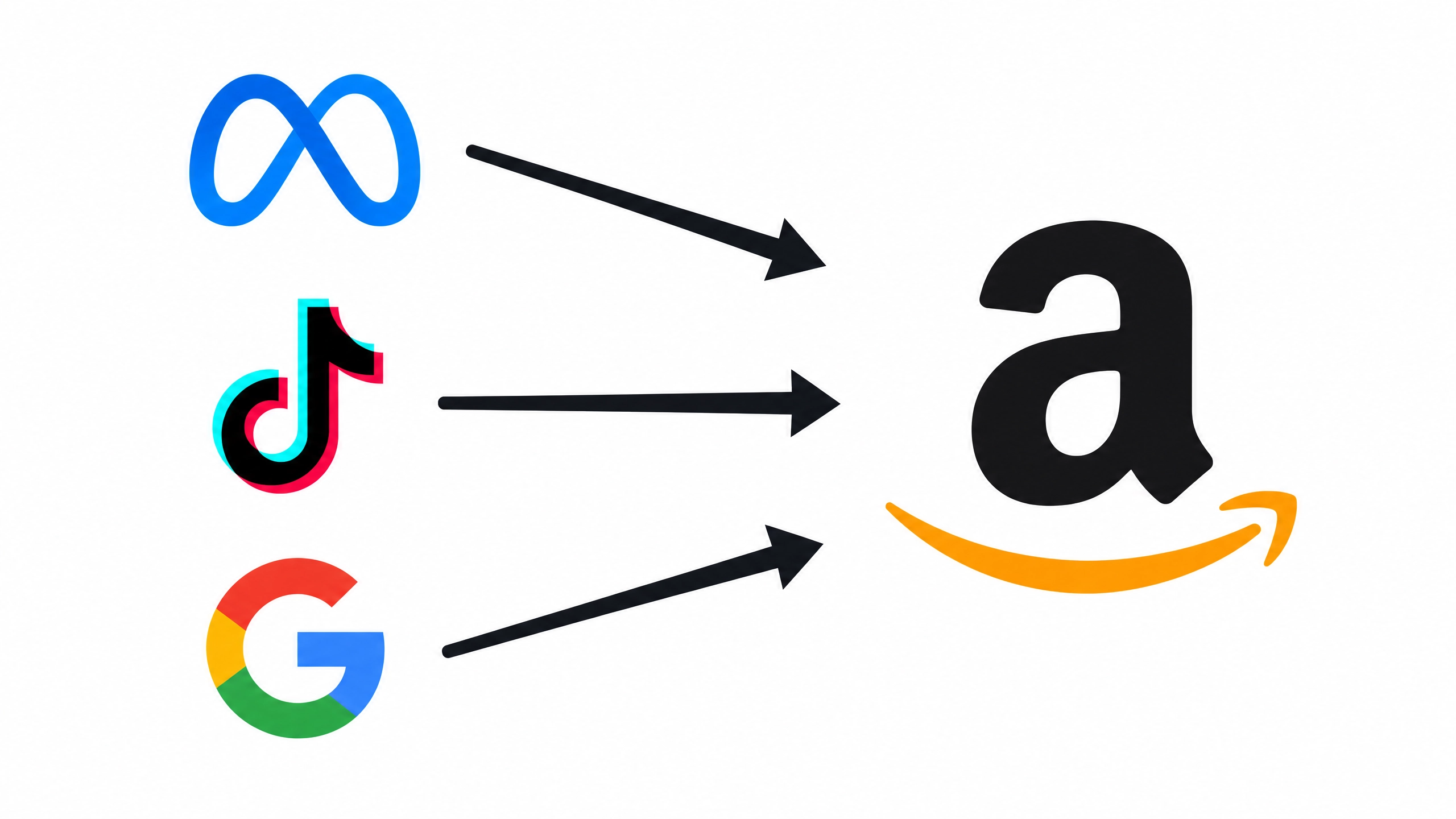
External marketing channels - including influencer partnerships, Meta advertising, Google search capture, and creator-led traffic - are now central to Prime Day performance. The brands that succeed are those entering Prime Day with demand already established outside Amazon, rather than attempting to generate it solely within Amazon’s marketplace ecosystem.
During Prime Day, Amazon becomes one of the most competitive paid media environments in global e-commerce. Sponsored placements remain finite while CPCs rise sharply across nearly every category. At the same time, heavy discounting disrupts typical purchasing behavior, creating volatility in conversion performance.
Amazon actively promotes a full-funnel advertising approach built around Sponsored Products, Sponsored Brands, and Sponsored Display formats. While this strategy improves internal visibility, it still operates entirely within Amazon’s closed ecosystem, meaning brands continue competing for attention within the same limited traffic pool.
As a result, external demand generation has become increasingly important. This shift should not be viewed as a replacement for Amazon advertising, but rather as a strategic extension that offsets the structural limits of Amazon’s internal auction system.
In practice, brands relying exclusively on internal Amazon traffic often struggle to achieve breakout performance, even when product fundamentals are strong. By contrast, products supported by pre-existing external awareness tend to convert more efficiently, scale faster during traffic surges, and maintain ranking momentum long after Prime Day traffic peaks.
Today’s purchase journey increasingly begins outside of Amazon, shaped by creator ecosystems, paid media, and content-driven discovery environments. Influencers establish trust well before product discovery occurs, while Meta and Google advertising capture active intent and enable scalable retargeting strategies. TikTok has accelerated this transition further by driving high-volume product discovery beyond traditional search-based behavior.
As a result, Amazon listings are no longer converting purely cold traffic. Instead, they increasingly serve as high-conversion endpoints for users who have already been exposed to brand messaging elsewhere. External traffic that converts on Amazon can also strengthen performance signals and contribute positively to long-term ranking development.
This shift is already visible across multiple categories. In beauty, for instance, brands that previously struggled to gain traction through Amazon PPC alone have achieved significantly faster early-stage growth after introducing structured external traffic programs alongside listing optimization and SEO improvements. The impact extends beyond increased traffic volume; conversion efficiency improves substantially once users arrive on Amazon with prior awareness and purchase intent. External marketing should therefore no longer be viewed as an incremental support channel. It has become a core driver of marketplace performance and a critical source of sustained ranking momentum.
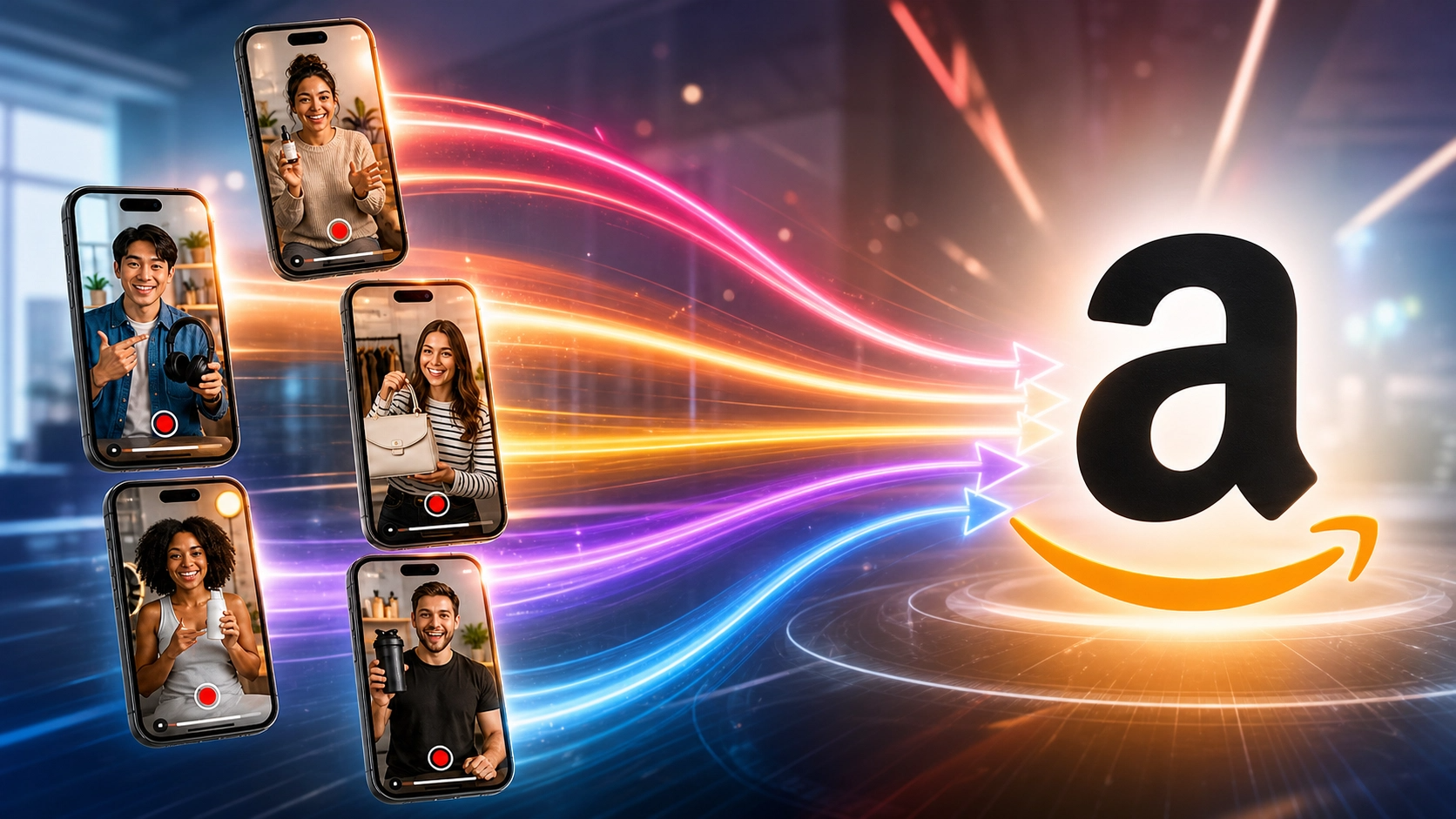
During Prime Day, brands compete within a finite Amazon impression pool, creating a largely zero-sum environment in which incremental PPC spending often produces diminishing returns. External marketing changes this dynamic by shifting demand creation beyond Amazon’s internal auction system. Influencer marketing introduces high-trust traffic that shortens the customer decision-making process, while performance marketing captures intent earlier and supports scalable retargeting throughout the purchase journey.
As demonstrated in our work with Biodance, when executed together, these channels reinforce one another. Influencers build familiarity and credibility, while paid media ensures that consumer intent is continuously captured and nurtured across multiple touchpoints. In this model, Amazon functions as the final conversion stage of an already established funnel rather than the initial point of product discovery.
Historically, Amazon operated as both a discovery platform and a conversion channel. During Prime Day, however, this dual role increasingly breaks down. Amazon now functions primarily as conversion infrastructure, where pricing comparisons occur, purchase decisions are finalized, and transactions are completed. Product discovery is steadily shifting toward external ecosystems such as TikTok, Google, and creator-led content environments.
By the time shoppers arrive on Amazon, purchase intent is often already established. This pattern becomes especially visible during major sales events, where products supported by sustained external exposure consistently outperform those relying solely on internal search visibility.
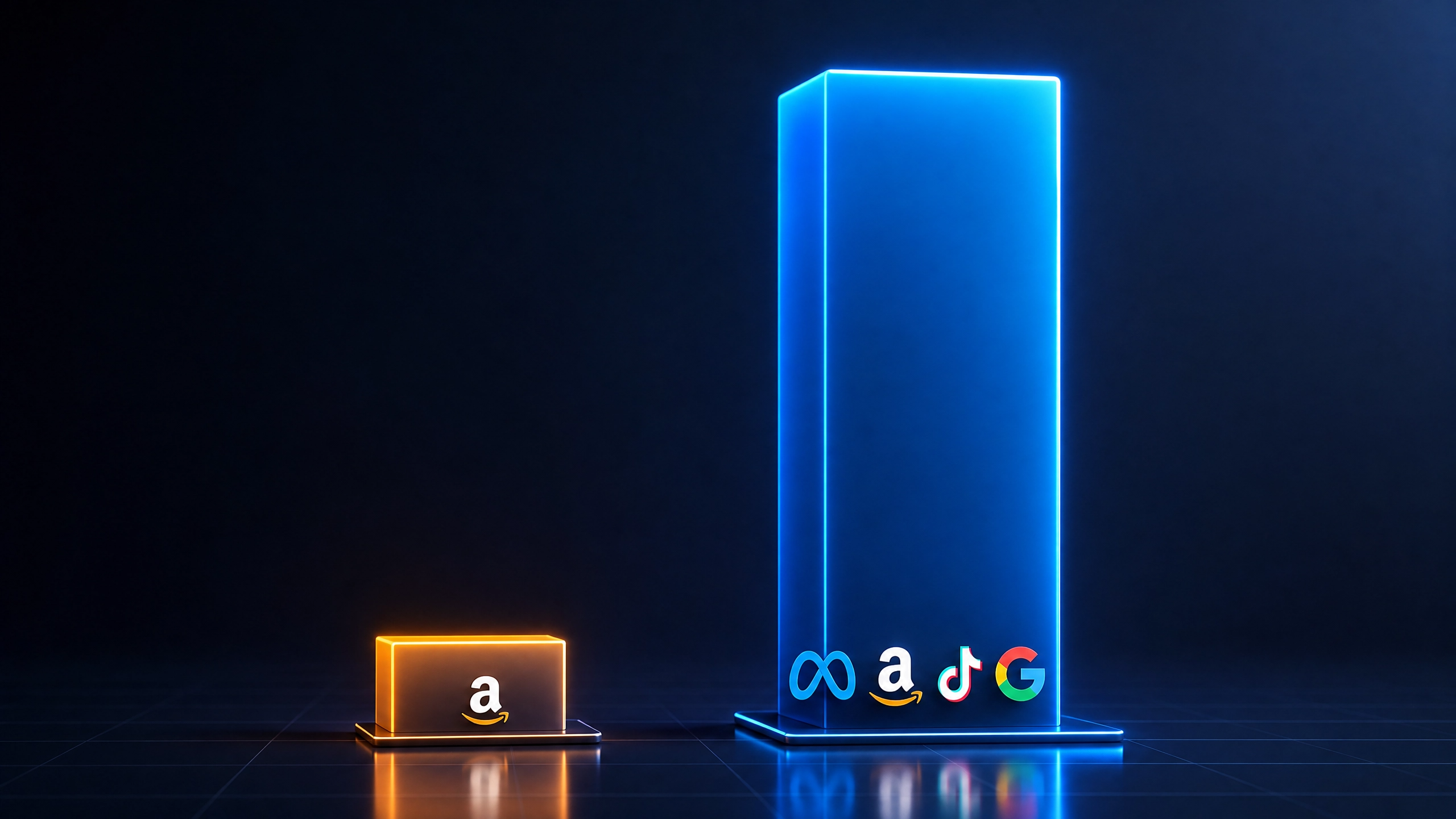
When every brand has access to similar Amazon advertising tools, differentiation within the platform inevitably becomes limited. Keyword strategy and bid optimization still play an important role, but on their own, they no longer create a sustainable competitive advantage.
What ultimately separates top-performing brands during Prime Day is not how aggressively they advertise, but how much demand they have already built before entering Amazon.
In practice, this gap becomes highly visible during the event. Some brands enter Prime Day relying almost entirely on PPC and find themselves paying rapidly escalating CPCs simply to maintain baseline visibility. Others arrive with pre-existing demand generated through external campaigns and influencer exposure, allowing them to convert more efficiently even under identical traffic conditions.
We have repeatedly observed that brands begin to outperform their historical category positioning once fragmented listings are consolidated, product architecture is aligned, and demand signals across traffic sources are unified. Similarly, brands that later restructured their advertising around intent-based targeting and clearer campaign segmentation experienced a measurable transition from inefficient spending toward scalable growth performance.
As illustrated in DISRUPT’s collaboration with InBody, performance improvements were not driven by product changes alone, but by rebuilding the underlying demand and advertising system supporting the brand’s Amazon growth. The difference was never the product itself - it was the demand system behind it.
The most successful brands in Prime Day 2026 are not those increasing budgets during the event itself, but those that begin building demand weeks or even months in advance. By the time Prime Day officially begins, audiences are already familiar with the brand, multiple engagement touchpoints have already occurred, and Amazon simply serves as the final stage of conversion.
Within this evolving structure, Amazon is no longer the primary environment where demand is created. Instead, it has become the place where pre-existing demand is efficiently captured and converted. This shift ultimately defines today’s competitive gap. The brands that win Prime Day are not the ones reacting during the event, but the ones that arrive prepared with demand already in motion.

Growth Manager
