On paper, this should be the best moment Korean beauty brands have ever had. Korean cosmetics exports reached $7 billion in the first half of 2026, up 27% year over year. The US accounted for $1.45 billion of that, or 20.7% of all exports, crossing the 20% threshold for the first time. NielsenIQ estimates US sales of Korean beauty products at roughly $2.4 billion over the past year, a 48% increase. Circana put prestige-channel K-beauty growth at 23% in the first quarter. And industry research shows K-beauty products sell roughly three times faster than the average beauty product on Amazon.
The category no longer needs a proof of concept. Nobody has to explain what K-beauty is to an American shopper anymore. That means brands entering the US today aren't opening a market. They're walking through a door that is already open, all at once, and almost all of them are taking the same route in.
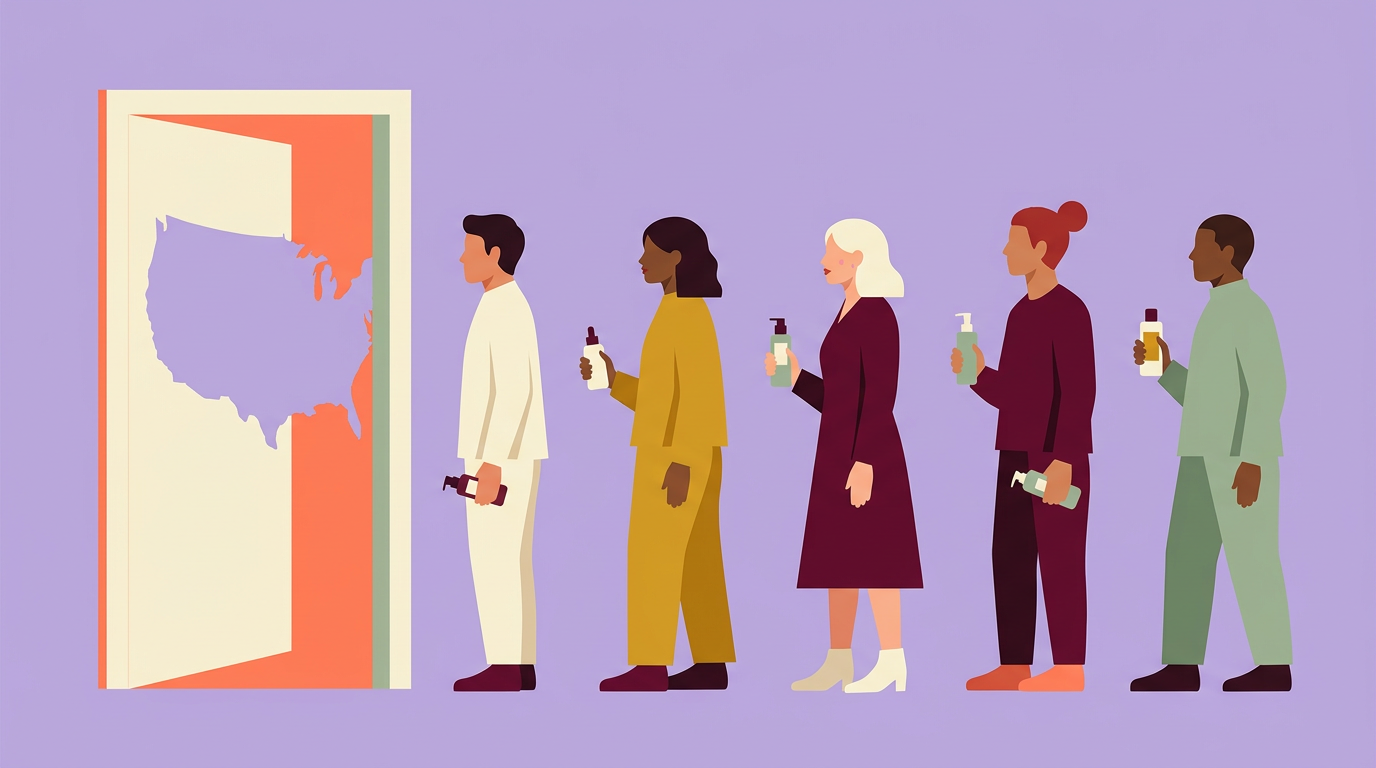
Build awareness through creators. Accumulate sales and reviews on TikTok Shop. Harvest the resulting demand on Amazon. At this point, the sequence circulates like a standard operating manual. There are good reasons it caught on. Per eMarketer estimates, US TikTok Shop GMV went from $9 billion in 2024 to $15.1 billion in 2025 and is tracking toward $23–24 billion in 2026. More importantly, in-app checkout on TikTok Shop converts at 5–8%, against 1.5–2% on Sephora.com and 1–3% on Instagram ads. Live shopping pushes it to 8–12%. The launch cycle for a beauty SKU has compressed from 18 months to six weeks.
Korean brands rode this better than anyone. US TikTok Shop beauty GMV grew 82% year over year in the second quarter of 2026, and seven of the top ten skincare brands on the platform were Korean. Skincare alone grew 123% over the trailing twelve months. Read only that far and the playbook looks like it works. The problem starts immediately after.

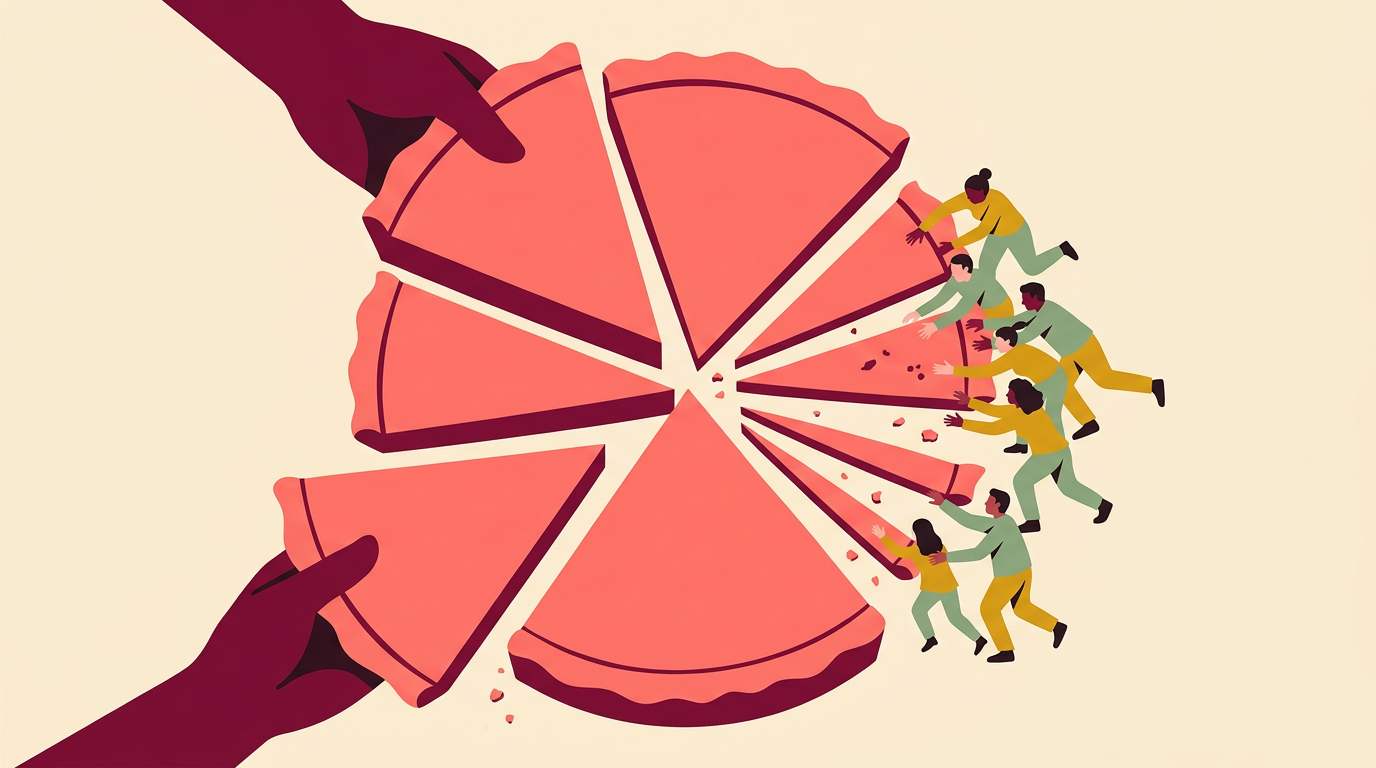
Look a little closer at the same dataset and the story changes. In TikTok Shop's skincare category, the top ten brands take 36% of sales, but Medicube and Dr. Melaxin alone account for 22.9% of that. The other eight brands in the top ten are splitting roughly 13% between them. Breaking into the top tier does not guarantee survival. Brands run the identical manual, arrive at the identical position, and only a handful walk away with revenue that matters.
The more revealing detail is that direction splits even inside the rankings. While the top five brands all at least doubled year over year, Anua was the only brand in the ranking whose sales declined, falling 44%. Anua is not a brand that under-executed. If anything, the opposite. When it signed Kendall Jenner as its brand face, the team was thinking about TikTok Shop rather than editorial shoots or social mentions. Few brands have understood this structure more precisely or pushed it more aggressively. When a brand like that starts losing revenue, the problem isn't execution. It's the structure itself.
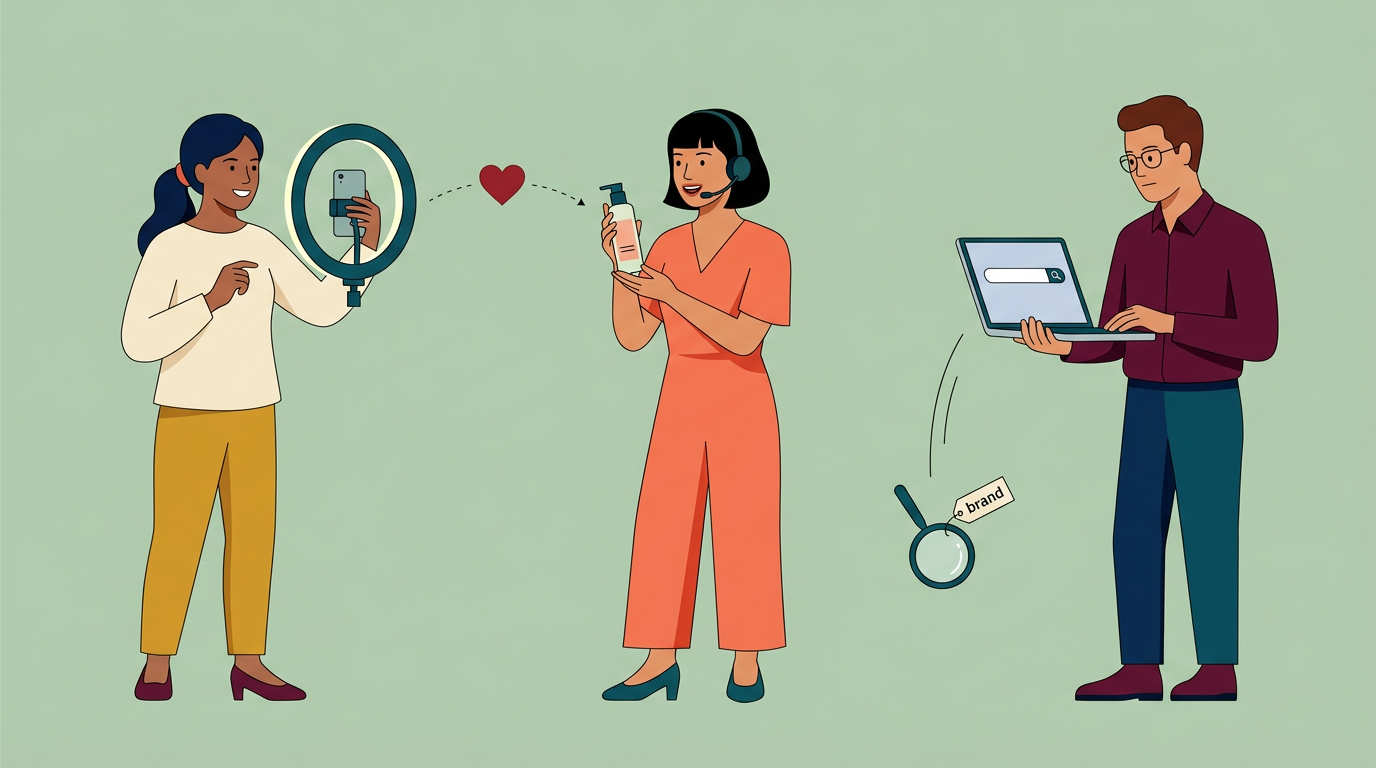
Most brands treat the three stages as a pipeline: pour water in at the top, revenue comes out the bottom. So when results stall, they pour more in at the top. More creators, bigger budgets, more content. But the three stages do completely different jobs. Influencers create demand by manufacturing interest that didn't exist before. TikTok Shop creates evidence by accumulating real sales, reviews, and the kind of sales velocity you can put in front of a retail buyer. Amazon harvests demand by converting people who already know your name and came looking for it. Different jobs mean there is necessarily a handoff point between each stage. And what breaks is almost never the stage itself. It's the handoff.
One assumption holds this entire structure up: that demand created on TikTok crosses over into Amazon search. Broadly, it does. What almost no brand knows is how much. If Amazon revenue rose during a month you ran a TikTok campaign, most teams read that as causation. But there may also have been a promotion running, a competitor may have gone out of stock, or it may simply have been seasonal.
There are signals you can actually measure: the trajectory of branded search volume, the shifting mix between branded and generic keyword traffic on Amazon, and the rise and fall of organic sessions that didn't come through advertising. Overlay those against your campaign calendar and you find out whether the handoff is happening or whether you've just been assuming it does. Without measurement, this isn't a strategy. It's a belief.
Here's the problem that gets overlooked more often. TikTok Shop and Amazon also compete for the same conversion. A shopper who decides to buy after watching creator content either checks out on the spot, which books as TikTok Shop revenue, or searches Amazon and buys there, which books as Amazon revenue. Either way the brand gets paid. The trouble is that when you view each channel through its own growth rate, that movement looks like incremental gain. If one channel is climbing fast while the other flatlines, the first thing to suspect is not that the pie got bigger but that revenue simply relocated. Channel dashboards each look healthy in isolation. The combined growth rate is often far more modest than either one suggests.
So what separated the brands that stayed at the top? Medicube's trajectory is worth studying. Its parent company APR saw its stock rise roughly 200% in 2025, driven by device products like the Booster Pro. The sequence matters here: Hailey Bieber's organic exposure came first, and the paid partnership with Kylie Jenner followed. The brand didn't buy demand to get started. It amplified demand that already existed. That distinction is decisive. Organic mentions appearing first means the product itself gave people something to talk about, and the budget layered on top wasn't paying to manufacture interest but to widen interest that was already there.
The fact that Medicube was the single most-searched beauty term during Amazon Prime Day should be read the same way. That is not a metric you can buy. It is evidence that shoppers knew the brand name and came looking for it, which means the handoff from the earlier stage genuinely worked. The same principle is at play in what top-ranked brands in AI search have in common: trust is built not by what a brand says about itself, but by what accumulates from what everyone else says about it.

Research firms are pointing at the same place. YipitData notes that many of 2026's fastest-growing beauty brands remain heavily dependent on a narrow set of viral products, a single platform, and algorithm-driven discovery, and frames the central question as whether they can convert early marketplace momentum into a durable multi-channel business with repeat purchasing power, broader retail distribution, and real brand equity. Put differently, most of the growth so far has been borrowed demand, and the moment to convert it into created demand is now.
Borrowed demand has an obvious signature. Traffic stops the instant influencer budget stops. Amazon search volume falls when TikTok Shop visibility drops. One algorithm change shakes all three stages at once. None of the stages stands on its own; every one of them is hanging off the front end. Created demand, by contrast, has a repeat-purchase layer underneath it. NIQ found that roughly 10% of US households now shop on TikTok Shop, spending about $118 a year across three to four purchases. The channel has already moved past one-off impulse buying into repeat behavior. The gap between brands sitting on that layer and brands without it only widens over time.
When Olive Young opened its first US store in Pasadena, California in late May, 6,000 people came through on opening weekend, and it still averages more than 1,600 visitors a day. A second location followed in Century City, with more planned. Carrying roughly 400 brands and 5,000 products, the store functions less like a brand and more like a marketplace. Sales velocity built online is becoming the case a brand makes for shelf space offline. And at that stage, the evaluation criteria are not buzz but repeat purchase rate and sell-through. This is exactly where brands that managed the two handoffs separate from those that didn't.
If you're running the same playbook, four questions are worth answering honestly. First, does branded search volume rise with the campaign and stay elevated after it ends? If it snaps back, you borrowed interest rather than built demand. Second, is the branded keyword share of your Amazon traffic growing? If only generic keyword traffic is up, you're still competing at the category level and the handoff hasn't happened. Third, are you looking at combined growth across TikTok Shop and Amazon? Channel-by-channel views make relocation look like incremental growth. And finally, do you have repeat purchase data? If not, start building it now. It's the first number a retail buyer asks for. For more on designing these channels as one connected system rather than separate executions, see Disrupt's 2026 global marketing playbook.
In the 2026 US market, running influencers, TikTok Shop, and Amazon together is not a competitive edge. It's table stakes. Nearly every brand is entering in the same sequence, which means knowing the structure explains nothing on its own. The real difference comes down to whether the handoffs between stages were measured and managed. The brands that survive aren't the ones that moved fastest. They're the ones that can tell the difference between demand they created and demand they borrowed.
Disrupt designs US market entry for Korean brands as one connected structure, from influencer marketing through to Amazon operations. We look at what transfers between channels and what leaks between them, not just what each channel reports. If you need to know whether the structure you're running is actually creating demand, a conversation with Disrupt is a good place to start.

Growth Manager
