Search behavior is changing faster than almost any other part of the digital landscape. Until recently, the primary goal of search marketing was straightforward: rank higher on Google. Brands focused heavily on SEO strategies designed to capture keywords, increase traffic, and drive clicks through search results. But search is no longer just about links.
Today, consumers are increasingly turning to AI platforms such as ChatGPT, Gemini, and Perplexity to ask questions directly. Instead of presenting users with a list of links, these platforms generate a single synthesized answer based on multiple sources.
This shift is more than just a change in search experience. It fundamentally changes how brands are discovered online. The key question is no longer “How do we rank higher?” Instead, brands now need to ask “How do we become a brand that AI systems trust enough to recommend?” As a result, the marketing industry is rapidly evolving beyond traditional SEO toward two emerging areas: GEO (Generative Engine Optimization) and AEO (Answer Engine Optimization).
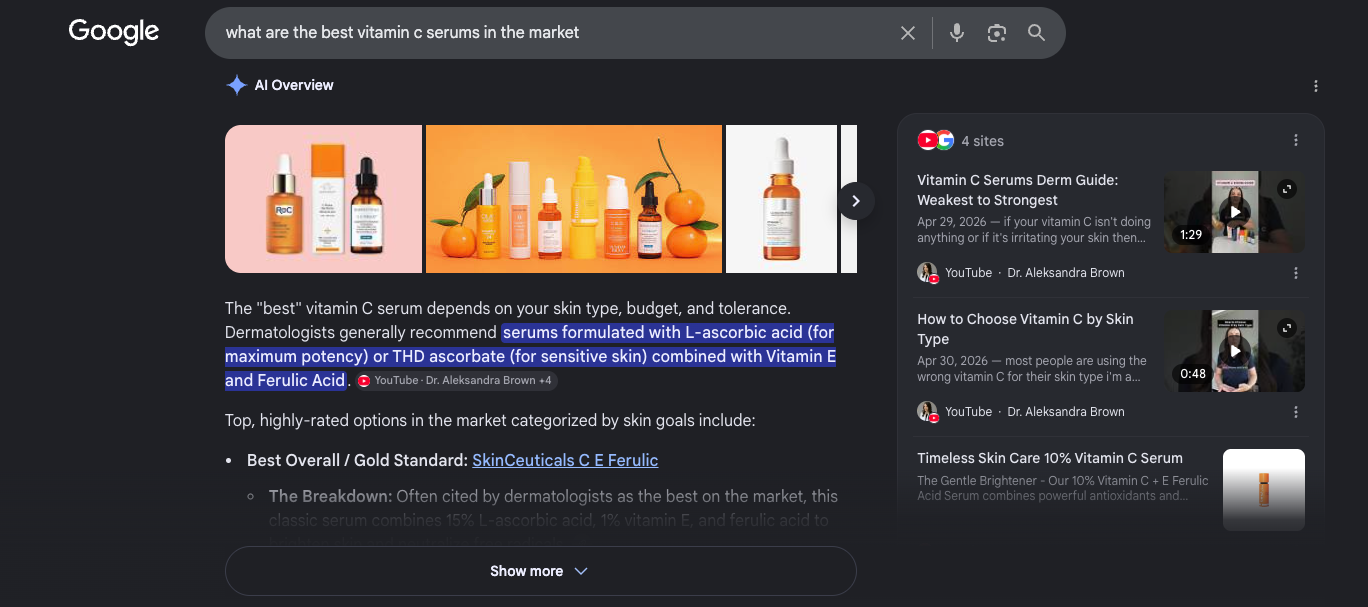
Traditional SEO strategies were built around relatively simple search behavior. Users typically searched using short keyword phrases such as “best vitamin C serum,” “golf rangefinder,” or “running shoes,” and brands optimized their content around those exact keywords to improve rankings and increase traffic. But AI-powered search is fundamentally changing how people search.
Instead of entering short keywords, users are now asking detailed and conversational questions like, “What’s the best vitamin C serum for sensitive skin that I can use daily?” or “Which launch monitor is most accurate for beginner golfers?” Search queries are becoming longer, more contextual, and much closer to natural human conversation.
This shift is important because these searches now include multiple layers of intent at once. A single question may contain product comparison, trust evaluation, purchase consideration, usage context, and problem-solving needs all within the same prompt.
As a result, simply repeating keywords throughout a webpage is no longer enough. AI systems need to understand the broader context surrounding a brand, including what problems it solves, how consumers talk about it, and whether it is trustworthy enough to recommend in a generated answer.

Many brands still use GEO and AEO interchangeably, but the two concepts focus on slightly different objectives within the evolving search landscape.
GEO (Generative Engine Optimization)
GEO refers to optimizing a brand for generative AI environments such as ChatGPT, Gemini, Perplexity, and other AI-powered search systems. The goal is not simply to rank higher in search results, but to help AI systems understand, interpret, and trust the brand well enough to reference it in generated answers. This involves structuring brand and product information clearly, building trustworthy external signals, and increasing the likelihood of being cited across AI-generated responses. In many ways, GEO is focused on improving discoverability and credibility within AI ecosystems.
AEO (Answer Engine Optimization)
AEO focuses more directly on creating content that can become the best possible answer to a user’s question. This includes building content formats such as structured FAQs, direct-answer pages, comparison content, step-by-step guides, and conversational search phrasing that aligns with how users naturally ask questions in AI search environments. If traditional SEO was about optimizing for search engines, AEO is increasingly about optimizing for answer engines.
In traditional SEO, a single well-optimized webpage could often rank highly on search results. But AI systems evaluate brands in a much more holistic way. Instead of looking at one page in isolation, AI platforms analyze information from across the internet, including websites, Reddit discussions, YouTube content, reviews, product pages, FAQs, news articles, forums, and social media conversations.
In other words, AI systems are no longer evaluating just webpages. They are evaluating overall brand consistency and trust signals across multiple channels. For example, a brand may claim on its website that its products are “safe for sensitive skin.” However, if Reddit discussions repeatedly mention irritation issues, product descriptions vary across marketplaces, or customer reviews contradict the brand’s messaging, AI systems may interpret the brand as less trustworthy.
On the other hand, brands that maintain consistent messaging across channels, build strong user-generated discussions, provide well-structured product information, and continuously publish educational or trustworthy content are significantly more likely to be recognized as reliable recommendation sources within AI search environments.
One of the biggest shifts happening within GEO today is the growing importance of Reddit and other community-driven platforms. The reason is relatively simple: AI systems heavily rely on real-world discussions and authentic user experiences when generating answers. In the U.S. market especially, platforms like Reddit contain exactly the kinds of signals AI systems prefer to reference, including detailed product experiences, nuanced comparisons, long-form discussions, and trust-based recommendations from actual consumers.
When users ask questions such as “What sunscreen actually worked for acne-prone skin?” or “Which golf rangefinder do beginners genuinely like?”, AI platforms often prioritize authentic user conversations over polished advertising copy or overly optimized brand messaging.
Because of this shift, modern GEO strategies are increasingly expanding beyond traditional SEO and PR efforts. Brands are now investing more heavily in Reddit visibility, community engagement, UGC strategies, creator-led discussions, and broader forms of social proof that help establish trust across digital ecosystems.
Brands can no longer rely solely on PR coverage and SEO blog content to shape perception. To remain visible and trustworthy in AI-driven search environments, they need to exist naturally within credible online conversations where real consumers actively share opinions, experiences, and recommendations.
Traditional SEO alone is no longer enough. Brands now need to prepare for how AI systems discover, evaluate, and recommend information across digital environments.
1. Build Content Around Real Questions
Content strategies should move beyond simple keyword targeting and focus more heavily on the actual questions consumers ask. As search behavior becomes increasingly conversational, brands need to create content that directly addresses user intent and problem-solving needs.
2. Strengthen Brand Entity Signals
Brand names, product names, descriptions, and core messaging should remain consistent across every channel. AI systems evaluate brands holistically, so inconsistency across websites, marketplaces, social platforms, and reviews can weaken overall trust and recognition.
3. Invest in Reddit and Community Visibility
Community-driven trust signals are becoming increasingly important within AI search environments. Platforms like Reddit, forums, and creator communities provide the authentic discussions and user experiences that AI systems often prioritize when generating recommendations and citations.
4. Structure Content for AEO
Content should be formatted in ways that AI systems can easily retrieve and interpret. Structured FAQs, comparison pages, direct-answer content, and conversational phrasing all help improve visibility within answer-based search environments.
5. Rebuild Product Detail Pages (PDPs)
Product detail pages should no longer function solely as sales pages. They increasingly need to serve as educational information hubs that clearly explain product benefits, use cases, ingredients, comparisons, and frequently asked questions in a structured and trustworthy format.
6. Create Cross-Channel Trust Consistency
Websites, social media, reviews, paid ads, PR coverage, and community discussions should all reinforce the same brand narrative. In the AI search era, consistency across channels is becoming one of the strongest signals of brand credibility and trustworthiness.
The most important question for brands today is no longer “How do we get seen?” It is “Why should AI systems choose our brand when answering users’ questions?” Brands that cannot answer this question risk gradually losing visibility as AI search continues to evolve.
At Disrupt, we approach GEO (AI Optimization) not as a form of traditional search optimization, but as a brand discovery system for the AI era. From content structure and e-commerce architecture to community visibility and AI-ready messaging, we help brands become discoverable across environments such as ChatGPT, Gemini, Perplexity, and emerging AI-powered search ecosystems.

Content Creation Specialist
