In the era of AI search, the way beauty brands compete is clearly changing. While it used to be important to appear at the top of search results, it is now more critical to be selected as a trusted answer within a consumer's query. The beauty category, in particular, is heavily influenced by AI search because it involves a vast amount of information that needs to be compared, such as ingredients, skin types, usage order, reviews, and efficacy evidence. OpenAI also notes that shopping research works especially well in information-dense categories like beauty.
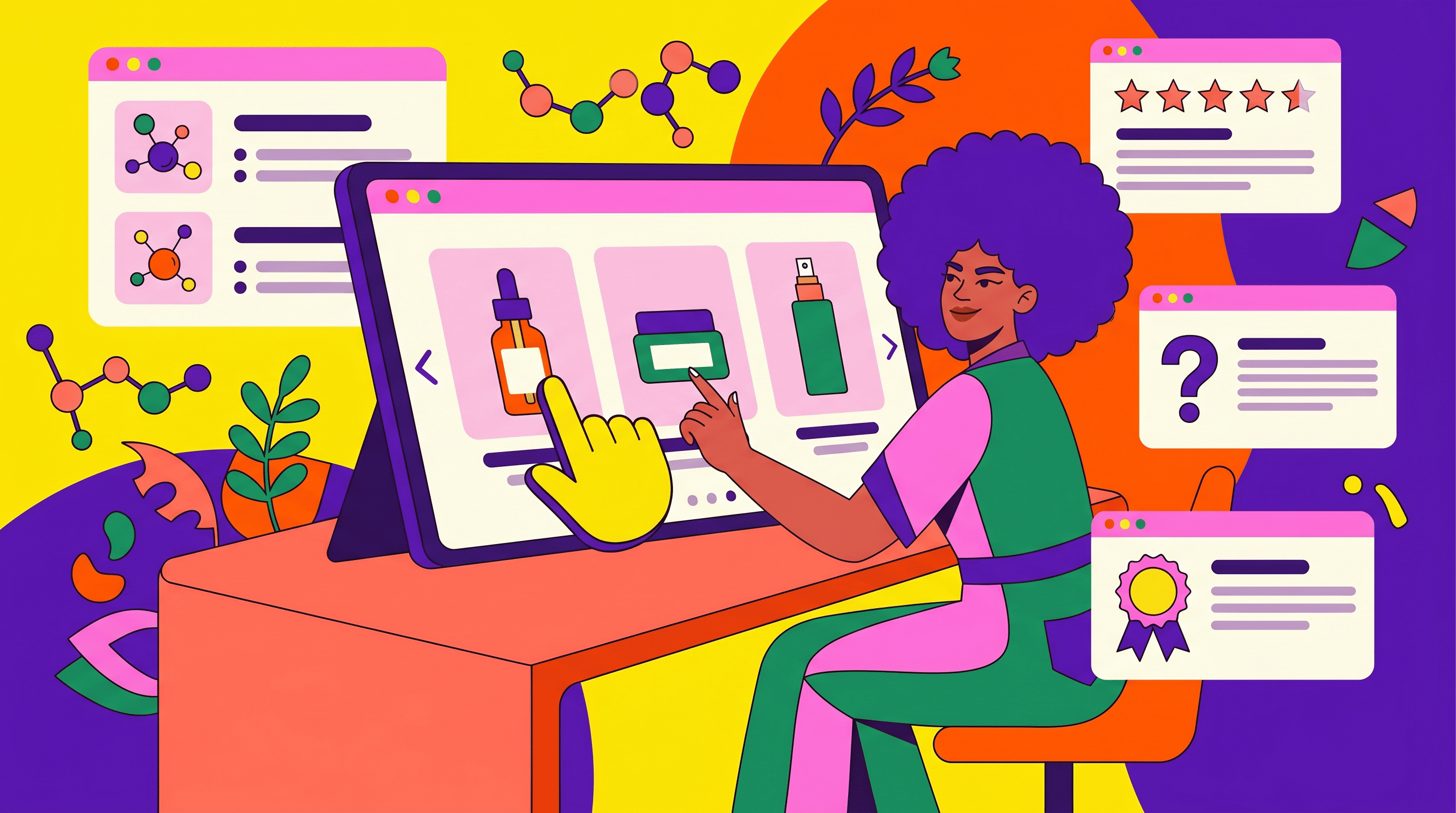
Beauty has long been a category familiar with search. However, the way people search is now shifting. Consumers no longer just type short keywords like "moisturizer recommendation." Instead, they ask AI much more specific questions, such as "moisturizer for sensitive skin that is non-irritating," "sunscreen that doesn't feel heavy for acne-prone skin," or "serum that can be used with Vitamin C." These questions go beyond simple searches, leading to exploration that includes comparison, recommendations, and decision-making right before a purchase.
This shift has significant implications for beauty brands. Consumers now describe their skin concerns and usage goals first, then receive product recommendations, rather than searching for a brand name first. In other words, we have moved from an era where brands compete to dominate search terms to one where they must enter the context of the consumer's question. As previously discussed in Disrupt's GEO articles, search patterns are shifting from Google-centric to AI-exploration-centric, and this change is manifesting in a much more concrete form within the beauty category.
Beauty is not just a category about looking pretty. Actual purchase decisions are far more complex. When choosing a product, consumers examine ingredients, concentrations, suitability for their skin type, seasonality, usage order, irritation potential, clinical test results, and the credibility of reviews. Consequently, AI demands more explanatory information in the beauty category than simple advertising copy.
For beauty brands to excel in AI search, broad and abstract expressions like "good ingredients," "gentle formula," or "suitable for sensitive skin" are no longer enough. Brands must be able to explain why certain ingredients were included, who they are suitable for, what routine they should be used in, and what they work best with. Yotpo, a marketing SaaS platform, analyzes that there is a high correlation between ingredient transparency and AI visibility in beauty GEO, emphasizing that a structure explaining the role and usage context of each ingredient is more important than a simple list of ingredients.
Ultimately, GEO for beauty brands is a battle of explanatory power, not just a battle for traffic. AI is more likely to cite brands that can provide evidence-based answers to consumer questions rather than those that rely on emotional copy. Therefore, in the beauty sector, information structure takes precedence over advertising copy.

Brands frequently cited in AI search share a common trait: they don't just package their products attractively; they organize their product information in an understandable way. For example, their product detail pages don't just contain a summary of benefits; they also include suitability by skin type, explanations of key ingredients, usage order, guides for concurrent use, FAQs, and review content. This allows AI to easily pull ready-made answers rather than having to interpret the brand's message.
What matters here is the depth and connectivity of the information. For instance, a page that goes beyond just saying "serum for sensitive skin" to include "why sensitive skin is prone to irritation," "how the ingredient helps soothe irritation," "how morning and evening usage differs," and "which skin concerns it is best suited for" becomes a much more valuable source for AI. A beauty brand's product detail page (PDP) must now be more than just a sales page; it must become a knowledge asset that AI can reference.
As Disrupt emphasized in previous ChatGPT SEO articles, AI prefers evidence over exaggeration and intuitive answers over abstract expressions. This holds true for this topic as well. For beauty brands to become stronger in AI search, they must shift their content structure to focus on "what answers can we provide when a consumer asks a specific question" rather than "what does the brand want to say."
GEO work is ultimately the process of defining which questions a brand should answer, creating an information structure that fits those questions, and building up sources and context that AI can trust. What is important here is not just creating a lot of content, but observing which sources AI actually retrieves more frequently, reuses, and cites in its final answers. We have seen this pattern clearly when conducting internal GEO work.
In AI search, you can verify through various metrics how often content is retrieved, its actual retrieval rate for answer generation, and its citation rate. Reddit has proven to be a consistently excellent source across these various metrics. This means that AI views Reddit not just as a reference, but as a source of information that is highly likely to be repeatedly used and cited when constructing actual answers. This is especially important if you are targeting the U.S. market.
If you want your brand to be exposed in U.S. AI search results and actually cited by ChatGPT and other LLMs, Reddit is a key platform that must be approached strategically. Therefore, a beauty brand's GEO strategy should not end with PR articles or media exposure. You must design a structure where the brand is naturally mentioned and discovered within user conversations, in addition to building context and trust signals on Reddit. This is precisely why Disrupt includes community strategies, including Reddit, when discussing GEO and AI optimization.
When many brands prepare for GEO, they first think of ingredient information or organizing FAQs. While this is the right direction, what is more important is the "Trust Architecture." AI does not evaluate a brand based on a single page. It interprets a brand by reading multiple sources together, such as the official website, reviews, retail channels, communities, and external editorial content.
Therefore, if you claim "low irritation" on your official website, provide different ingredient explanations on a marketplace, use completely different messages in advertisements, and cover only shallow information in your FAQs, it becomes difficult for AI to understand the brand consistently. Such discrepancies are even more fatal in the beauty category. The more specific the consumer's question—such as skin type, texture, or ingredient compatibility—the more easily these gaps in information are exposed. In the era of AI search, product packaging must also be designed to ensure that product information, incentives, and branding messages are delivered accurately and consistently.
In short, GEO for beauty brands is not just about "exposure optimization." It is closer to the work of making a brand a safe and reliable recommendation when AI answers a consumer's question. Ultimately, what matters is not pretty sentences, but a state where the assets that support information consistency and trust are interconnected.
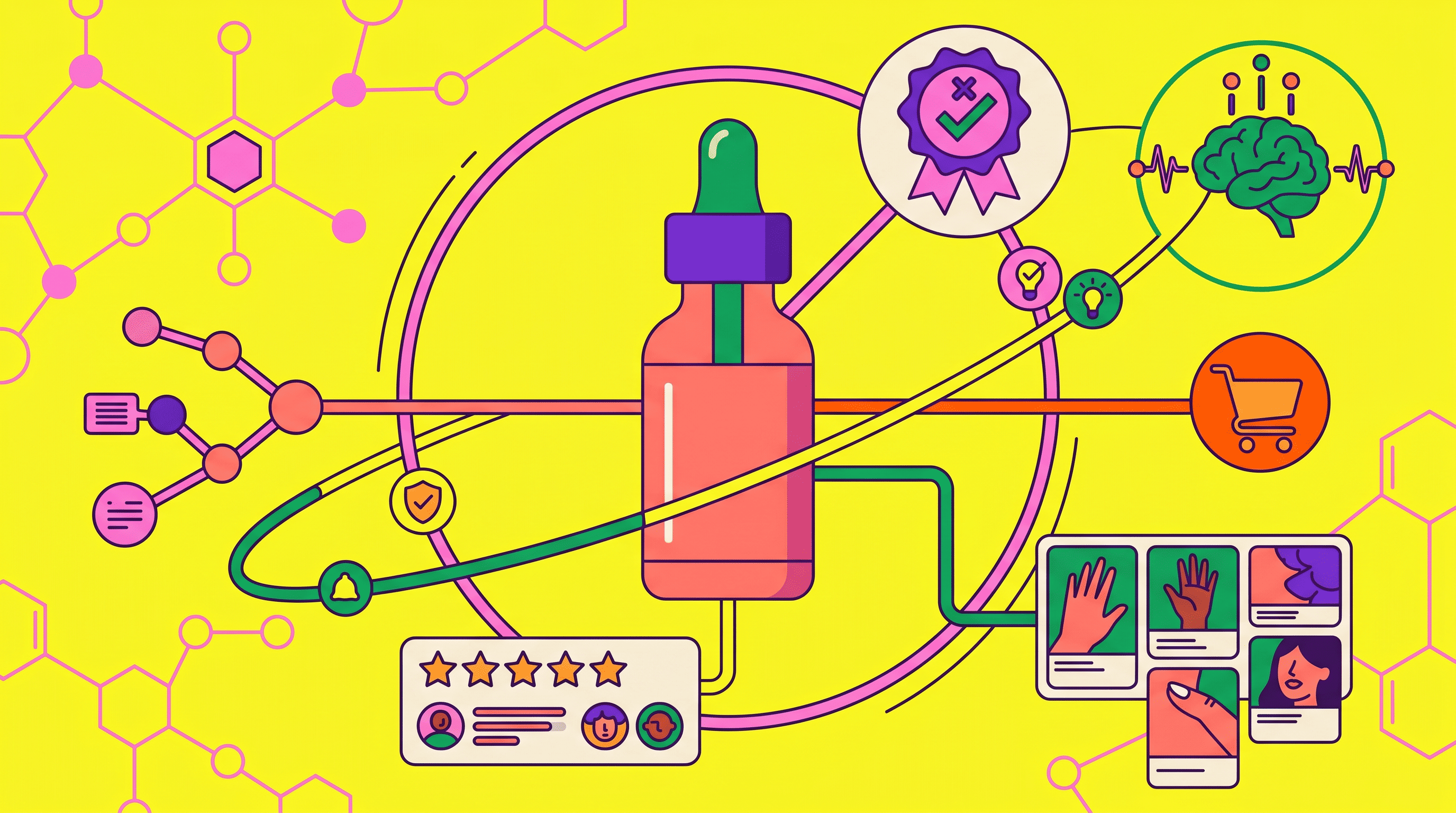
This is where many brands get stuck again. They assume that tidying up a few blog posts, a handful of FAQs, and some product detail pages will be enough to handle AI search. In reality, that is not the case. For beauty brands, GEO is not just a task for the content team; it is an operational challenge that requires collaboration across branding, e-commerce, performance, and CRM teams.
The branding team must decide how to define products through language, the e-commerce team needs to structure product detail pages and catalog information, and the performance team must identify the messaging and question patterns that drive conversions. The CRM team should turn actual customer inquiries into FAQs and content, while the social team needs to build up UGC and real-world usage contexts.
This is why Disrupt describes GEO on our service page not as simple search optimization, but as a brand discovery system for the AI era. For a brand to appear naturally in environments like ChatGPT, Gemini, Perplexity, and Copilot, the entire brand operating system must be integrated, rather than just individual departments.
Ultimately, the strategy for beauty brands in the AI search era is not just about "how to get more visibility." The more important question is, "When a consumer describes a specific skin concern, why should the AI choose our brand?" GEO only becomes meaningful when you can answer this question.
What beauty brands need to prepare right now is not just a few keywords, but an information and trust structure that allows the brand to be selected within a query. Explaining ingredients, organizing usage contexts, connecting verification assets, and aligning messaging across all channels—when all of this is built up, AI search finally becomes another growth channel for the brand. To design that structure faster and more accurately, you need a partner who understands global market query styles, search contexts, content tone, and e-commerce operations.
Disrupt's GEO (Generative Engine Optimization) servicestarts from that very point.

Growth Manager
