A Korean brand spends months building their Shopify store. The design looks premium. The products are exceptional. They run ads to the US market, traffic comes in, and almost none of it converts. The team assumes the ads need fixing. They adjust creatives, shift budgets, test new audiences. The conversion rate barely moves.
The problem was never the ads. It was the store. This is the most common and most expensive mistake Korean brands make when going global. They build a Shopify store that works beautifully for a Korean buyer, then send international traffic to it and expect the same result. The cultural gap in UX, trust signals, and information architecture is invisible to the team that built it, and devastating to the buyers who land on it.
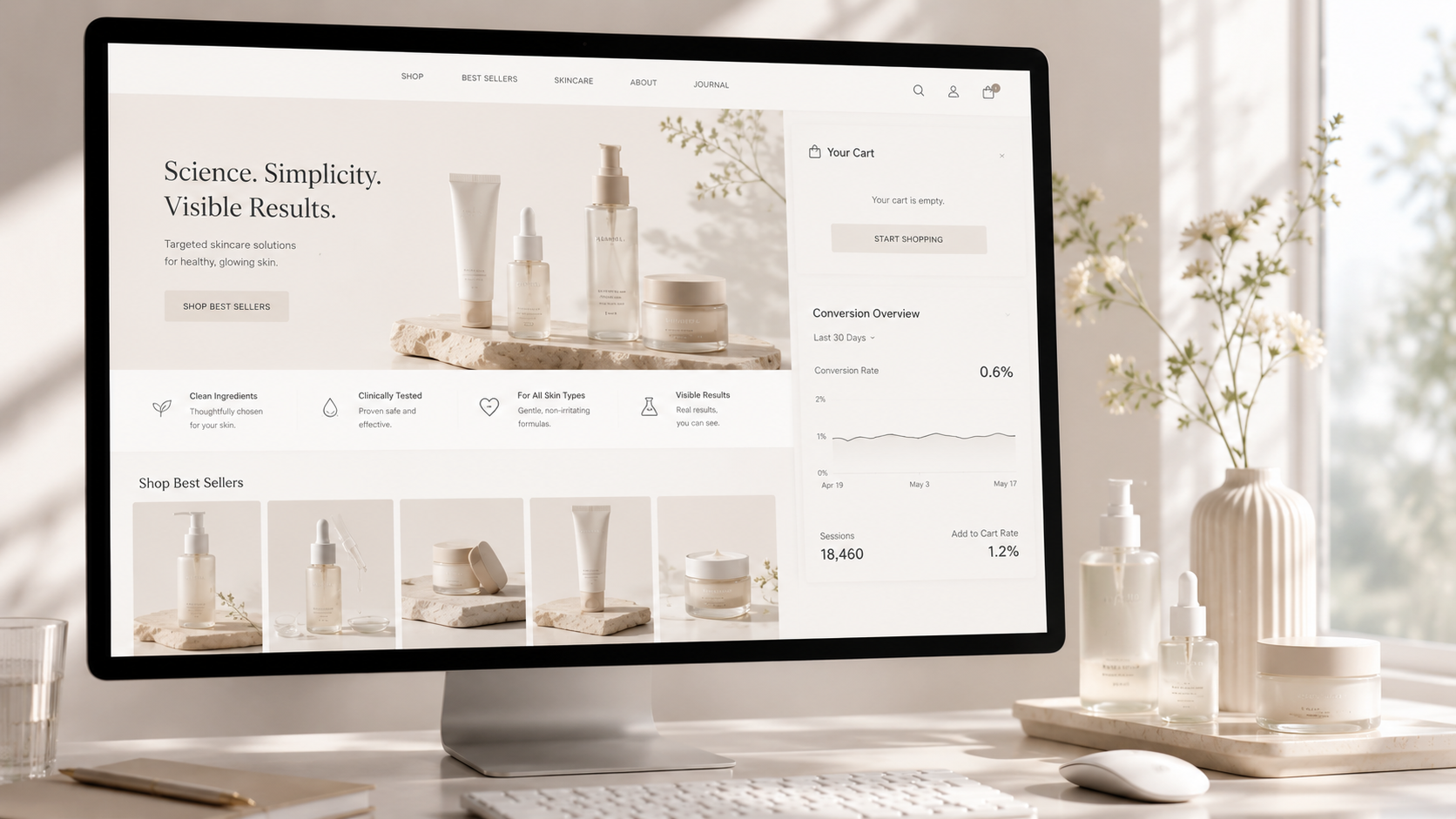
International buyers, particularly in the US and Western markets, go through a very specific mental checklist before converting. It is not conscious. It happens in seconds. But if your store fails any part of it, they leave. They need to immediately understand what the brand is and why it is credible. They need social proof that comes from people who look and sound like them. They need pricing, shipping, and return policies that feel transparent and local. And they need a mobile experience that loads fast, reads cleanly, and removes every possible point of friction between interest and purchase.
Most Korean brand Shopify stores are built around product. Global buyers need to be sold on the brand first. This is not a translation problem. A perfectly translated store with the wrong UX architecture will still fail. It is a fundamental difference in how trust is built across cultures, and it shows up in every element of the shopping experience, from the homepage hero to the product page structure to the checkout flow.
Here is the layer most brands miss entirely. In 2026, your Shopify store is not just being visited by buyers. It is being read by AI systems that decide whether to recommend your products when someone asks ChatGPT or Perplexity for a recommendation.
A store built without GEO optimization, without structured product data, clear entity signals, and AI-readable content architecture, is invisible to the AI systems now mediating purchasing decisions. Bad UX costs you conversions today. A store that AI cannot read costs you the customers you never even knew you were losing.
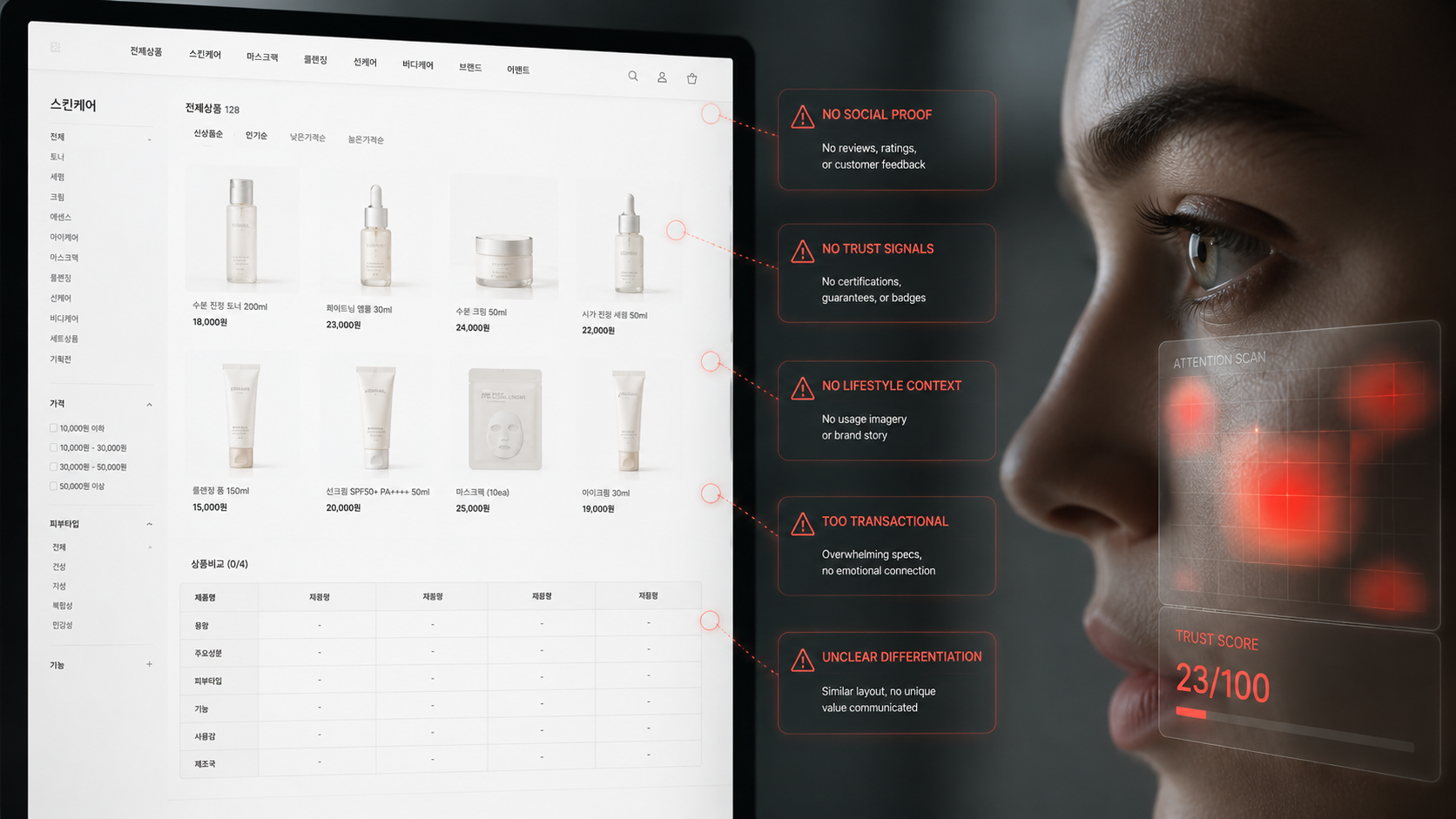
Most brands diagnose their Shopify problem too late. By the time they notice the conversion rate, the buyer has already decided. The decision happened in the first four seconds on the homepage, and it was never really about the product. Here are the three UX mistakes Korean brands make consistently when going global, and why each one is more expensive than it looks.
Mistake 1: Building for product discovery instead of brand trust
Korean e-commerce design tends to be product-forward. Clean grids, detailed specs, SKU variety. This works in markets where the brand is already known. In the US or European market, your brand is unknown, and an unknown brand presenting products before establishing credibility reads as a risk, not an opportunity.
Western buyers need to be convinced that the brand is real, credible, and built for them before they will look at a single product. That means a homepage that leads with brand story, lifestyle imagery, press mentions, certifications, and partnership logos. InBody, one of Disrupt's global expansion partners, had this exact problem. Their original Shopify store read like a product directory. After a full redesign that led with cinematic hero content, brand partnerships with institutions like Texas A&M and retailers like Walmart, and lifestyle-first product pages, their Shopify ROAS increased by 71% and CTR increased by 180%.
Mistake 2: Weak or wrong social proof
Reviews are not optional. But the type of review matters as much as the volume. Korean brands often carry strong Korean-language review bases that mean nothing to a US buyer. Unverified testimonials, generic star ratings without context, and a lack of user-generated content from buyers who look like the target customer all signal risk instead of credibility. The stores that convert best in Western markets lead with verified reviews, video testimonials, and content from real customers in the target market. This is also, not coincidentally, exactly the kind of content that AI systems cite when recommending products.
Mistake 3: An AI-invisible product catalog
AI shopping tools, including ChatGPT, Perplexity, and Google's AI Overviews, are now a meaningful source of purchase intent traffic. But they only recommend products they can confidently understand. A product page without structured data, clean benefit-led copy, and schema markup is effectively invisible to these systems. The UX problem and the AI visibility problem are the same problem. Fix one, and you begin to fix both.
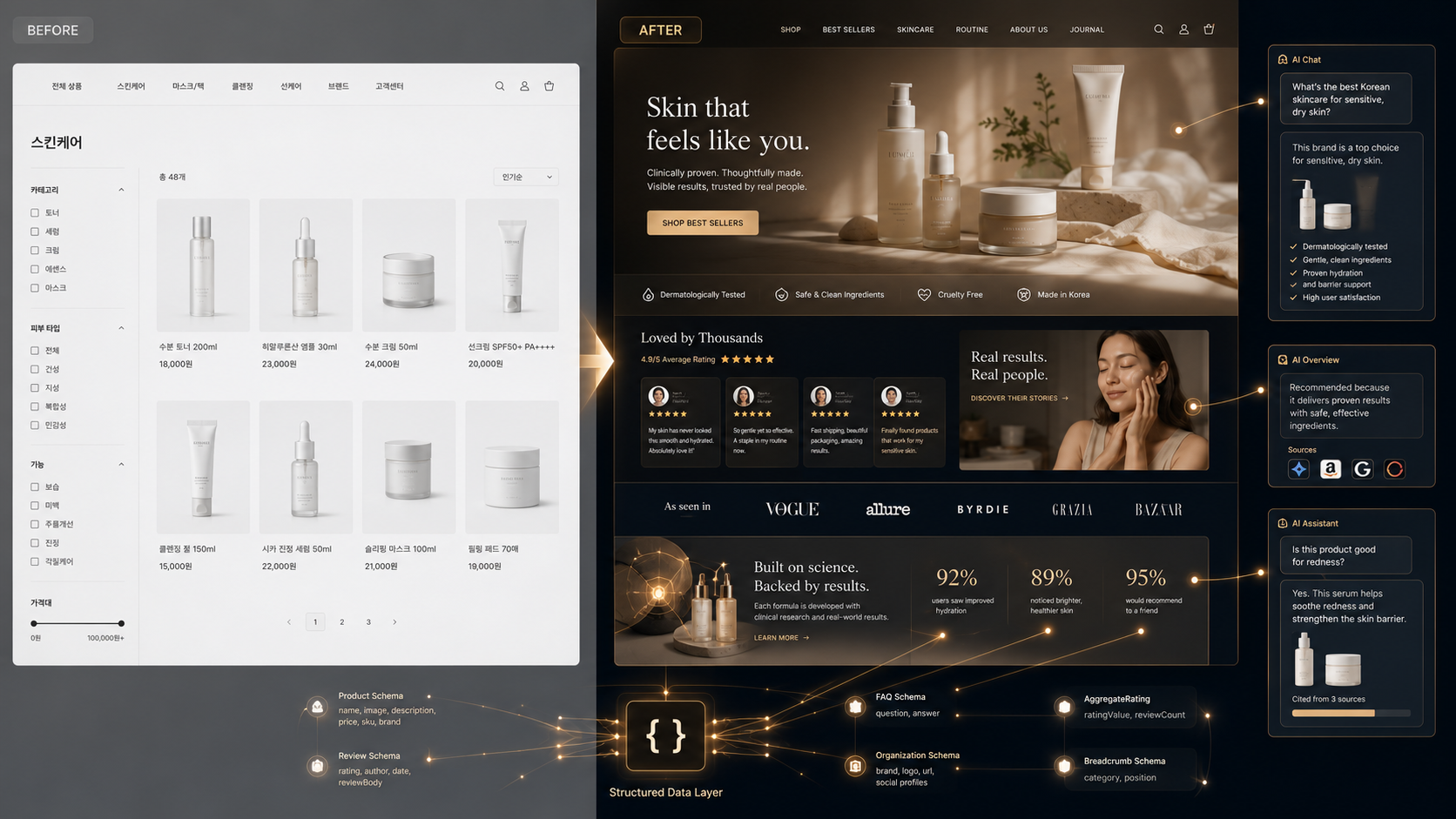
The brands getting this right are not just redesigning their Shopify stores. They are rebuilding the trust architecture from the ground up, and doing it in a way that serves both human buyers and the AI systems now sitting between the brand and the customer. Here is what that looks like in practice.
Start with information hierarchy, not aesthetics
The first fix is not visual. It is structural. A globally optimized Shopify store answers three questions for the buyer in the first ten seconds: who is this brand, why should I trust it, and is this made for someone like me. That means the homepage leads with brand identity and credibility signals before products. It means partnership logos, press coverage, and institutional affiliations placed above the fold. It means lifestyle imagery that reflects the target market, not the origin market. The visual redesign follows from this hierarchy, not the other way around.
InBody's Shopify transformation is the clearest example of this in Disrupt's portfolio. The original store had no clear hierarchy, minimal lifestyle visuals, and almost no trust signals visible on arrival. The redesign led with a cinematic homepage, surfaced brand partnerships with Texas A&M, Walmart, and ESPN, rebuilt product pages with visual explainer modules and embedded video, and commissioned a full content production shoot in Korea specifically for the US market. The result was a 71% increase in Shopify ROAS and a 180% increase in CTR. The product did not change. The trust architecture did.
Build social proof that the target market can use
This means English-language verified reviews, video testimonials from real buyers in the US market, and UGC that reflects the lifestyle the brand is selling into. Collecting this takes time, which is exactly why starting early matters. Every week without it is a week of converting at below-potential rates.
Build for AI at the same time
This is where Shopify CRO and GEO converge. The same product pages that need clear, benefit-led copy for human buyers also need structured data and schema markup for AI systems to read them. The same brand story that builds trust with a US buyer also builds the entity clarity that helps ChatGPT and Perplexity understand what the brand is and who it serves.
COSRX, another Disrupt partner, built AI visibility into their content strategy from the beginning. The result is a brand that appears consistently in AI-generated recommendations across beauty and skincare categories, driving qualified traffic that converts at rates traditional search traffic cannot match. Disrupt's AI optimization service is built to handle both layers simultaneously, because treating them separately leaves performance on the table.

The window to build AI visibility is not permanent. Right now, AI systems are actively learning which brands to trust in each category. The brands that establish credibility, structure their content for AI readability, and build genuine presence in the conversations AI pulls from will become the default recommendations in their categories. The brands that wait will find the position already occupied. The same is true for Shopify performance in global markets. Every month a Korean brand runs international traffic to an unoptimized store is a month of real revenue lost at the conversion layer, on top of whatever is being spent on media.
These two problems, Shopify UX built for the wrong market and AI search invisibility, are not separate projects requiring separate budgets. They are the same underlying problem: a brand that has not yet been built for global buyers. Solving them together is not just more efficient. It is the only way to get the full return on international market investment.
This is what Disrupt does as a Shopify creation agency and GEO marketing agency working with Korean brands expanding globally. The work is not a redesign and then an optimization layer added later. It is a single integrated build that treats human trust and AI trust as two dimensions of the same outcome.
InBody came to Disrupt with strong products and a Shopify store that was not converting. The solution was not more ad spend. It was rebuilding the store as a brand experience designed for the US buyer and restructuring the content so that every page could be read by both a customer and an AI. The performance results followed. COSRX built AI visibility early, before it became a standard expectation in the beauty category, and now holds a position in AI-generated recommendations that competitors are struggling to reach.
The brands winning in global markets in 2026 are not the ones with the biggest budgets. They are the ones who understood earliest that the store, the content, and the AI presence all have to be built together. If your brand is planning for global growth or already running international traffic without the conversion rates to justify it, contact Disrupt to talk about what the build actually looks like.

Account Executive
