As the holiday season approaches, some brands on Amazon become busier than at any other point in the year. They finalize discount levels, build out promotions, raise advertising budgets, verify inventory, and revisit product pages in anticipation of far heavier traffic than usual. Yet brands preparing for the very same season often end up with very different results. Some treat PBDD(Prime Big Deal Days) as a starting point and carry that momentum through BFCM(Black Friday Cyber Monday) and into the wider holiday shopping season. Others see a brief spike during PBDD, settle back to normal levels soon after, and then arrive at BFCM, one of the biggest sales opportunities of the year, without being ready to take full advantage of it. So what makes the difference?
Brands that win the holiday season do not prepare for a single event. They prepare for the entire season. The same is true of PBDD. The goal is not simply to squeeze the maximum revenue out of those few days. PBDD is better understood as the first benchmark for the entire season, and as the moment to recalibrate everything that follows. The reason is straightforward: once PBDD ends, a brand knows far more than it did going in. It knows which products drew the most demand, which keywords brought customers in, which ads actually drove purchases, which discount levels moved conversion, and which items sold through faster than forecast. That data should not end its life as a PBDD scorecard. It becomes the starting point for the strategy that carries a brand through BFCM and Holiday Shopping.
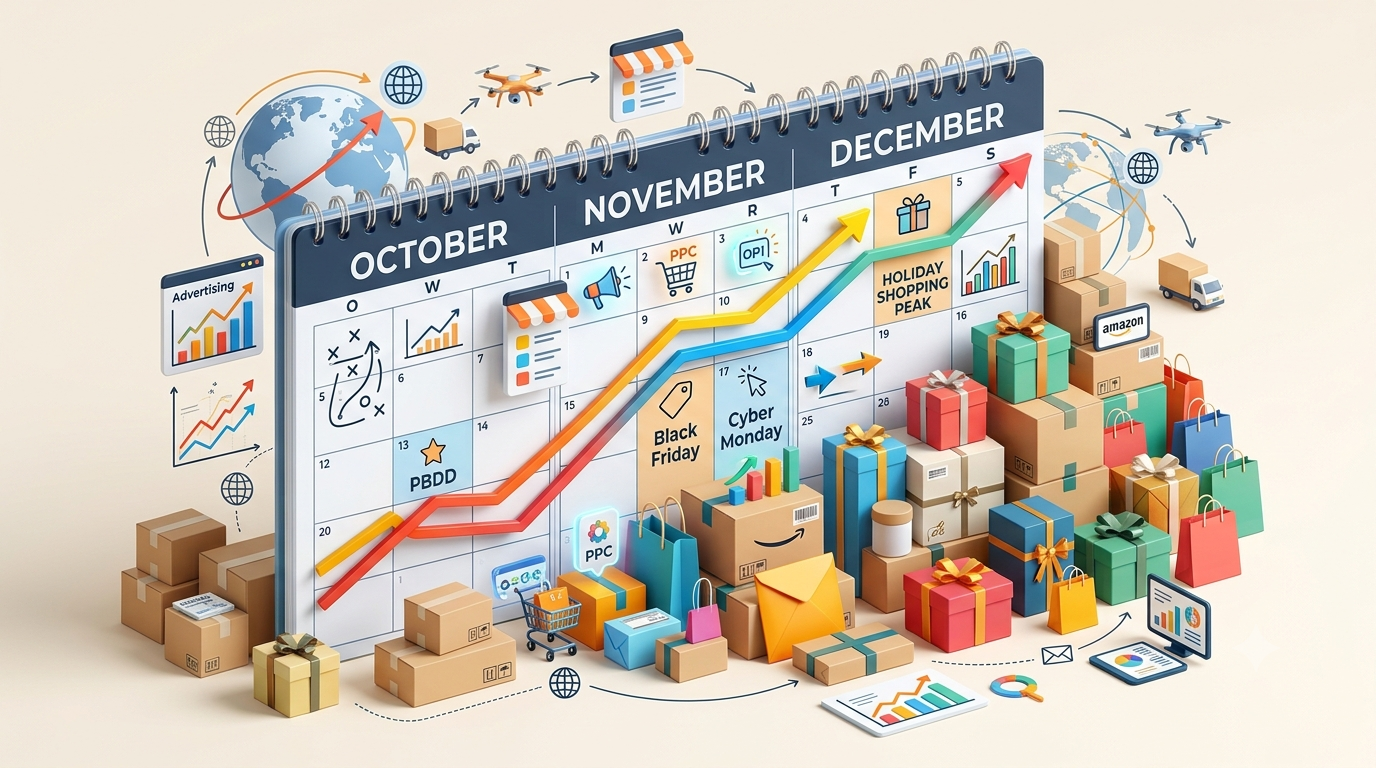
Many brands still treat PBDD as a standalone promotion: prepare advertising beforehand, push hard on sales during the event, and return to business as usual once it closes. That approach quietly forfeits the most valuable thing PBDD has to offer, because the next holiday event needs to be planned from the moment PBDD ends. Imagine that a particular SKU significantly outsells expectations during PBDD. The first question should not be how much revenue the event generated. It should be whether that product can sustain a similar level of demand through BFCM. Sales velocity needs to be reviewed, inventory requirements recalculated, and stock availability through BFCM confirmed.
If a product underperformed, more ad spend is not automatically the answer either. The more useful exercise is to find the cause first, whether search demand was lower than expected, whether the price was competitive enough, whether the discount was too shallow, whether the detail page failed to give a compelling reason to buy, or whether the targeting was misaligned from the start. The challenge is that this is not a single analysis you run the day after PBDD and then set aside. Sales velocity and inventory keep moving after the event, and advertising performance shifts with competition and consumer demand. Holiday planning therefore calls for continuous monitoring of inventory and advertising performance, so a brand can tell what to push harder and what to pull back. Inventory, in particular, cannot be managed apart from advertising. If a SKU starts selling far faster than expected, the choice between scaling spend further and easing off because stock is running down has to be made as one decision, not two.
Through a stretch that demands this much ongoing management, it is difficult for an internal team to watch every change while carrying its usual workload. This is where an agency earns its place in the holiday season. The role is not to analyze PBDD results and hand over a report. It is to keep tracking sales, inventory, and advertising performance afterward, and to update the strategy as the brand moves toward BFCM and Holiday Shopping. Seen this way, PBDD is the first real-world test capable of answering these questions, and those answers belong in a redesigned BFCM plan. That is why PBDD deserves to be viewed as one stage of a larger sequence: PBDD preparation, PBDD execution, data analysis, strategy adjustment, BFCM preparation, BFCM execution, and Holiday Shopping expansion. It is one connected process, and it is where the gap opens between brands that perform well during PBDD and brands that perform well across the entire holiday season.
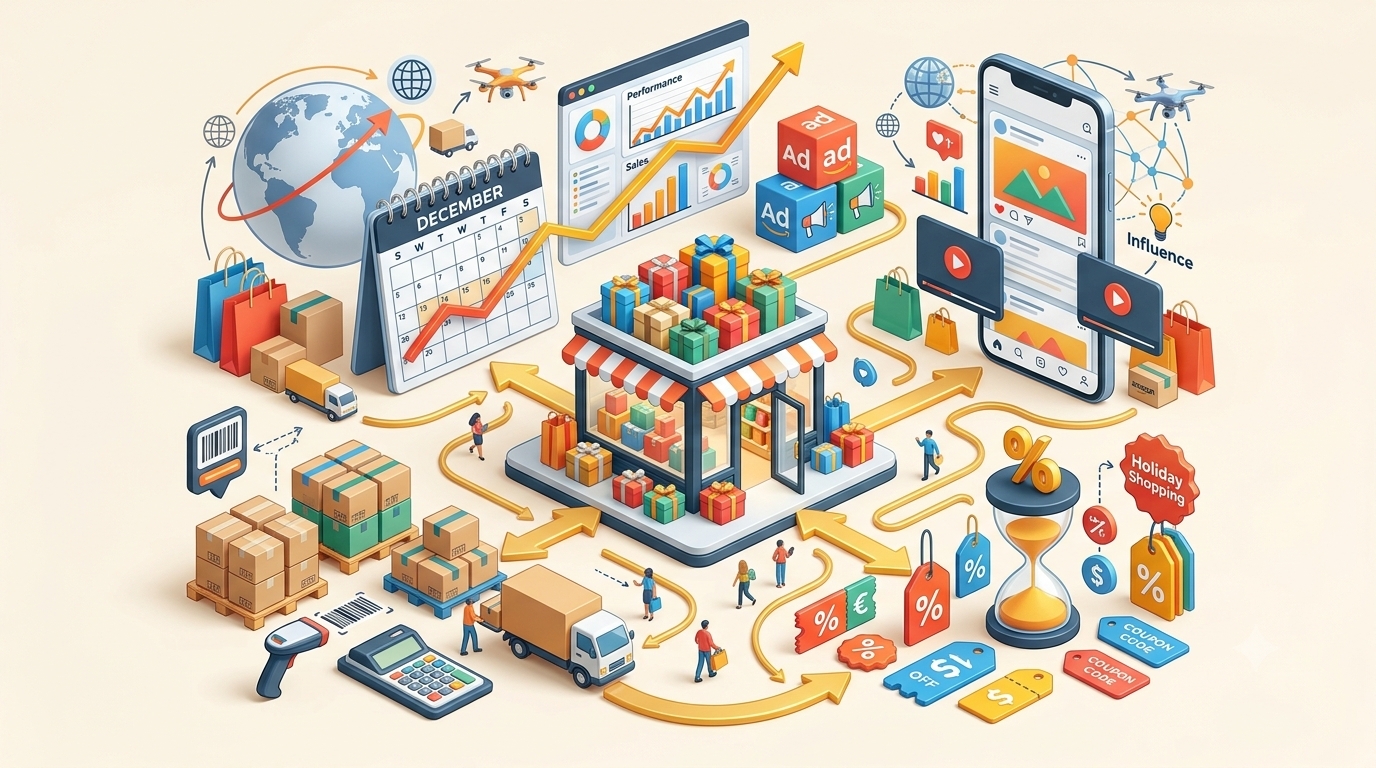
So what should a brand prepare first? Most start with the advertising budget, asking how much to spend per day during the event, how far to raise the budget compared with a normal month, and which keywords deserve higher bids. These are all fair questions, but something needs to be settled before any of them: inventory. Sales volume becomes far more volatile during the holidays, and when deeper discounts and heavier advertising land at the same time, stock can disappear much faster than projected. If advertising brings customers to a product that has just gone out of stock, the damage runs well past a single campaign metric. The brand loses the sale, and the stockout drags on advertising performance afterward. That is why holiday planning has to answer "how much can we sell?" and "how much inventory do we need?" at the same time.
Inventory is also not a box to tick once before the event. After PBDD, brands need to track actual sales velocity, compare it against projections, and recalculate what they need through BFCM and beyond. A product selling faster than expected may deserve more aggressive advertising, though it will also run down stock more quickly. Where inventory is healthy but sales velocity is soft, moving budget to another product is often the more efficient choice. Holiday inventory management is not about confirming that stock exists. It is about reading sales velocity alongside advertising performance and deciding where inventory and investment should go.
Then comes the discount strategy. A bigger discount is not automatically a better one. A deeper cut can accelerate sales while eroding margin, and a discount that is too shallow can leave a product invisible next to competing offers. The real question is not what percentage to offer, but what discount level produces the strongest business outcome for each individual product. Once discounts are set, the advertising strategy has to change with them. Carrying over the same structure used in a normal month is not enough. Search demand shifts during major events, and campaigns that ordinarily deliver little can perform strongly once a promotion is attached to them. At the same time, campaigns that usually return strong ROAS can lose efficiency as competition drives CPCs up. Amazon PPC advertising needs to be planned differently for holiday events than for normal operations.
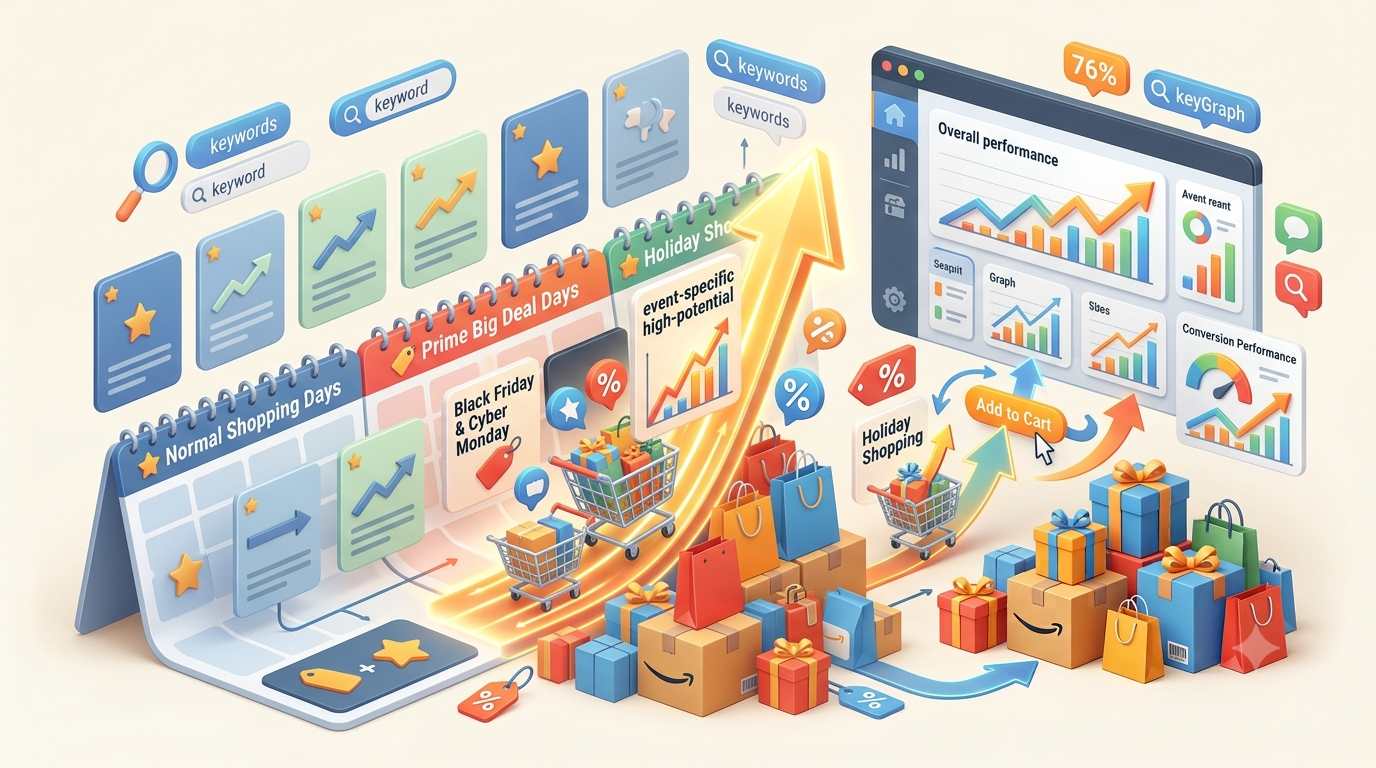
Not every campaign behaves the same way throughout the year. A campaign that receives a limited budget because search volume is thin or conversion is weak in a normal month can turn genuinely meaningful during a major shopping event. Holiday gift demand, for instance, lifts searches around terms such as "best gift," "holiday gift," or "gift set," while shifts in competitor discounts and advertising activity reshape the competitive landscape entirely. Campaigns like these should not be cut simply because their everyday numbers look weak. The more valuable exercise is identifying which campaigns become relevant specifically during major shopping events, and PBDD is the ideal moment to test them. It reveals which keywords move with increased holiday demand, which campaigns convert better once a promotion is attached, and which products become more efficient to advertise while a discount is live. Campaigns that show potential during PBDD can then be scaled far more aggressively during BFCM.
This is one of the reasons Disrupt takes the holiday season so seriously. Event-specific campaigns are easy to miss when an account is managed on the same monthly rhythm as the rest of the year, because performance during a major event can change from one day to the next. Before the event, identify the campaigns worth testing. During the event, move budget according to actual performance. After the event, analyze the results and carry those findings into the next opportunity. A campaign that drew little attention because of weak everyday performance may come alive during PBDD, while the campaign that usually delivers the strongest efficiency may struggle under heavier competition. Recognizing those shifts and redefining the role of each campaign is what separates simple ad execution from strategic holiday advertising management. Holiday advertising is not about spreading the same budget evenly across every campaign. It is about understanding how consumer behavior changes before, during, and after an event, and reallocating investment accordingly. Amazon advertising should not be judged on its usual efficiency alone. Brands need to understand how consumer behavior changes by season, and how the role of each campaign changes with it.
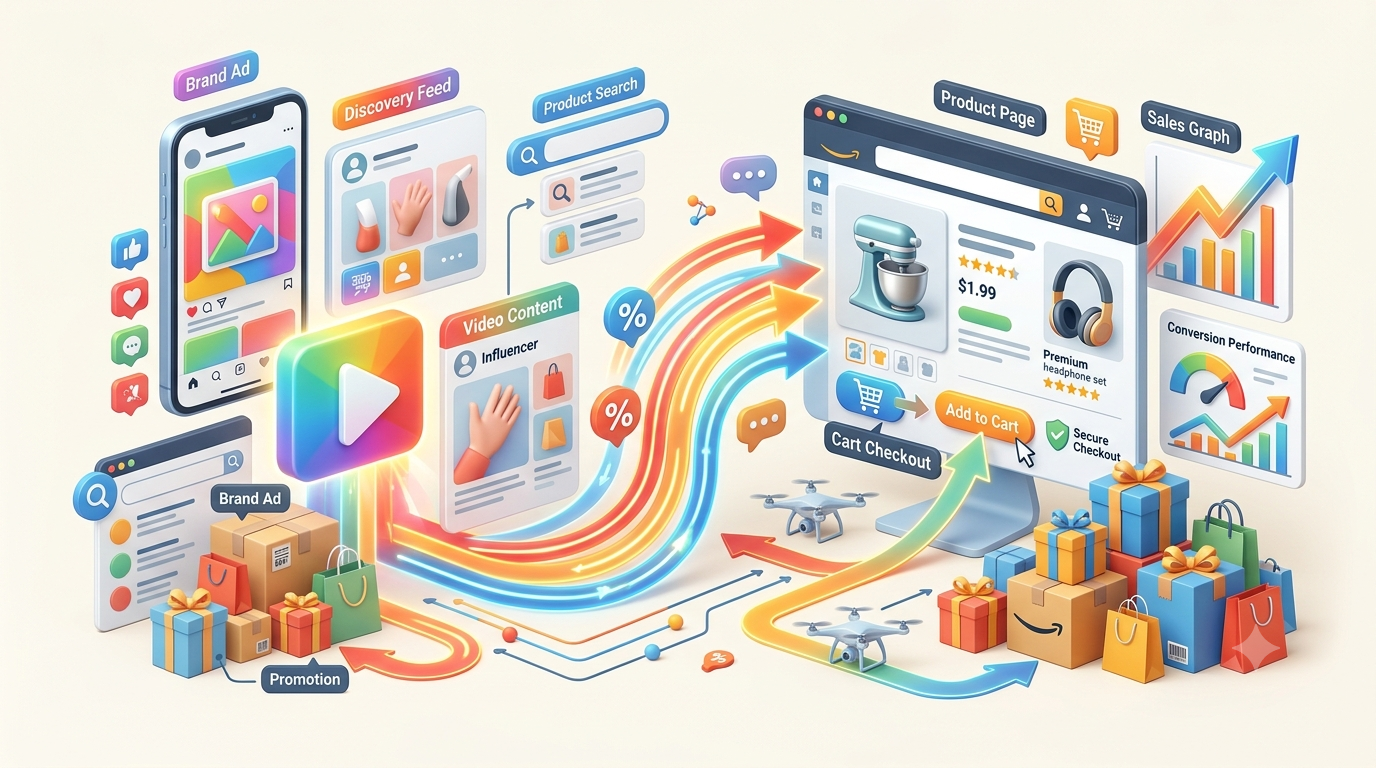
Holiday shoppers rarely begin their journey by opening Amazon and searching for a specific product. They may come across a gift idea on social media, see an influencer recommendation, search for a product on Google, or discover a brand for the first time through video content. During the holidays especially, when shoppers already have a clear reason to buy, connecting interest created outside Amazon to the eventual purchase becomes decisive. From this perspective, Amazon digital marketing is not simply about running ads inside Amazon. It is about connecting every touchpoint a customer encounters, from first discovering a brand to finally purchasing on Amazon, into one continuous journey. A holiday plan therefore has to account for more than Amazon advertising alone. Video content, social media, influencers, and external advertising all have a part to play. If PBDD reveals strong giftable demand for a particular product, a brand can strengthen video content around it ahead of BFCM, build interest through external channels, and then capture that demand through Amazon search and conversion.
Seen this way, a holiday strategy is not a question of how much to spend on BFCM advertising. It is about securing inventory, designing the right discount strategy, preparing product-level advertising plans, identifying the campaigns that grow stronger during major events, generating demand through external marketing, and converting that demand into purchases on Amazon. None of this gets settled in a single meeting. You prepare before PBDD, monitor during it, analyze once it closes, adjust inventory and advertising on the back of those results, and update the strategy again before BFCM. This is why working with an Amazon marketing agency becomes particularly valuable through the holiday season. The role is not to run advertising on a brand's behalf, but to keep surfacing the changes an internal team is likely to miss and to move the strategy toward the next opportunity.
Brands that build real holiday revenue do not stop at PBDD. They identify what works during the event, use those findings to reshape the next plan, scale what proves itself during BFCM, and carry that momentum into Holiday Shopping. So the most important question to ask while preparing for PBDD may not be how much you can sell during the event. It may be what you need to learn from PBDD to win the entire holiday season.
That question changes what PBDD is. It becomes more than a single sales event. It becomes the first data point for building a stronger holiday season as a whole. What brands ultimately need to prepare for is not one day of PBDD sales. It is a single connected holiday season that starts with PBDD, moves through BFCM, and continues into Holiday Shopping: protecting inventory while driving more sales, investing aggressively in the campaigns that prove their value, capturing the opportunities that surface only during major events, and turning interest generated outside Amazon into real purchases. Disrupt does not simply help partners finish one holiday event successfully. We connect each event to the next opportunity and build the entire holiday season together.

Account Executive
