“We’ve hired only high performers, so why is the teamwork so off?”
“There are so many recruitment tools out there, so why can’t we find the right fit?”
“Does cutting recruitment costs mean giving up on building a great team?”
These questions aren't just concerns for HR managers. Whether you are a marketer, a business leader, or a startup founder, HR has become a core strategy wherever people matter. There is a technology currently disrupting that strategy: AI.
DISRUPT is a digital marketing agency that helps Korean brands succeed in overseas markets, and as such, we collaborate with people from diverse countries, backgrounds, and professional roles in a rapidly changing environment. In this setting, it is more important than ever to find not just “someone who is good at their job,” but “someone who can grow with this team,”, and, “someone who can create synergy with the organization’s direction.”
However, the problem is that it is difficult to accurately determine this using only existing HR systems.
This is where many companies have found themselves struggling, and the adoption of AI has emerged as a key solution. Recently, numerous global companies and recruitment platforms have been attempting to automate hiring and organizational management using AI. This AI technology is being recognized not just as a way to increase work efficiency but as a tool that helps facilitate more objective and fair decision-making.
For example,
In fact, AI is already entering the realm of decision-making in many HR settings.
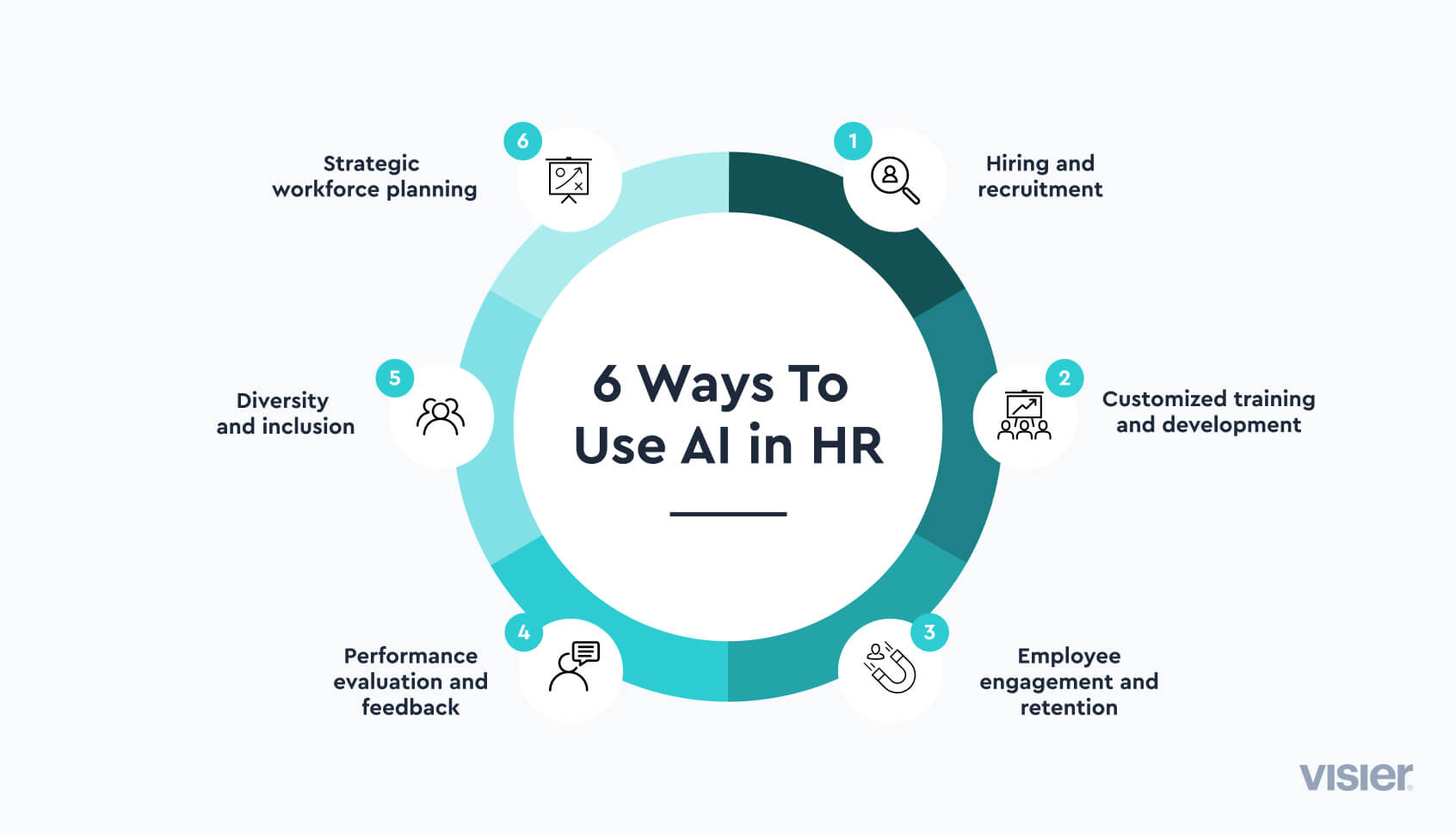
Source: https://www.visier.com/ai/ai-in-hr/
Another reason AI has become important in HR is that hiring failures lead directly to 'brand loss.' We live in an era where we must approach internal team building as strategically as we handle customer content. Of course, there are clear limitations and concerns. Ethical issues regarding AI evaluating people and the risk of compromising diversity and inclusion remain subjects of debate.
However, one thing is certain: AI is no longer just for marketing, design, or strategy; it has become a core technology that HR must also pay attention to. The HR of the future will act as an expert who understands people well and knows how to use tools that interpret people more deeply through data.
So, can AI solve everything? The answer is “no.” Because HR is ultimately about dealing with 'people.' More important than simple efficiency or fast decision-making is the 'contextual insight' to understand and decide why a person is a good fit for our team and why they are needed.
For instance, a candidate might look average on a resume, but in reality, they may have demonstrated autonomy and execution in a startup environment. Or, their specific project experience might align perfectly with the organization's current goals. These are areas that AI still struggles to detect. Judging 'good people' involves unquantifiable intuition, human conversation, and cultural fit.

Source: Vishal Patel: Collaboration between AI and Human Values goes a long way
These cultural nuances become even more critical in global hiring. In a 'global team' composed of talent with different nationalities, languages, and cultural backgrounds, subtle differences in communication styles or leadership approaches can lead to unexpected collaboration hurdles. Therefore, the introduction of AI in HR is most effective when used as a supportive tool.
While AI excels at repetitive tasks, data-driven judgments, and candidate screening, the final decision remains in human hands.
Many companies are trying to introduce AI into their workflows, but the reality is that it is still viewed as an experimental phase. This is because there is still a need to think through how to create a 'structure where people can work better' using AI.
For example,
These considerations directly impact the quality of the 'global team culture' we build. While AI can assist in creating this culture, it cannot design or take responsibility for it. This leads us to ask questions that are more important than the technology itself:
“What kind of people does our organization want to work with?”
“What kind of environment are we providing to ensure they can perform at their best?”
Constantly grappling with the answers to these questions and integrating technology and data at the right time and place—that is the true sustainable AI strategy for HR.
We are currently in the midst of a transformation driven by AI. This change is rapid, complex, and volatile. Yet, one thing remains clear: whether you leverage AI, successful HR is impossible without a profound understanding of 'people.'
AI is undoubtedly a powerful tool. But what matters more is the clear intent and philosophy behind how we use it. And the starting point is always the same.
“How can we find, work with, and help great people grow?”
DISRUPT works with people who are truly committed to answering this question.

Management Support Manager


