


If your brand has ever launched content in overseas markets, you’ve likely experienced this: a campaign that was a massive hit domestically but somehow fell short of expectations in views, conversions, and engagement abroad. The problem is that the message isn't reaching the local consumer. It may be “content translated into English” on the surface, but in reality, it is content that doesn't speak their language. In 2025, simple translation is no longer enough to succeed in the global market. True competitiveness lies not in “changing the language” but in “localizing the meaning and emotion.”
If translation is a “mirror” that merely reflects words, localization is a “bridge” that connects cultures and emotions. For example, while a phrase like “Experience it now!” might trigger a purchase in Korea, it could appear to be overly salesy and off-putting in Europe or North America. Even with the same sentence and the same product, the persuasive hook changes completely depending on the culture. Ultimately, words can be translated, but emotions cannot. And marketing without emotion fails to move the consumer's heart.
Disrupt’s data analysis shows that brands relying on simple translated content for global advertising consistently face the following issues:
- High bounce rates and short dwell times on local sites
- Low click-through rates (CTR) and unstable ad performance
- Significant variance in ROAS across different markets
- Declining brand trust and engagement

It all starts the moment a consumer feels, “This message isn't for me.” This misunderstanding leads to abandonment before a single click is even made. Yet, many brands fail to realize this, continuing to pour budget into inefficient creative revisions, re-shoots, and re-translations. The real problem is simply that the content isn't speaking the local consumer's language. This is where a global performance marketing agency like Disrupt comes in. Beyond simple translation, our role is to bridge the language gap and create genuine “empathy” through localization strategies that capture a brand's identity and emotional resonance. Take the case of the Korean brand Inus, which successfully boosted both sales and brand trust by using content tailored to local sensibilities while maintaining its core brand tone.
Brands like Netflix, Nike, and Samsung succeeded on the global stage not because they simply translated their content, but because they “designed the context.” Disrupt is a global performance marketing agency that understands this difference better than anyone. Here is how DISRUPT designs global marketing:
- Data-driven, granular target insights
- Modular content strategy by market, platform, and culture
- A global performance system that tests both emotions and actions
This approach goes beyond simply translating language; it enables your brand to speak in the “everyday language” of the local audience. For instance, in the case of the men's beauty brand Grafen, we reconstructed their branding with a global sensibility while maintaining their Korean identity, leading to explosive growth in brand awareness across Southeast Asian and Japanese markets. You can learn more about DISRUPT's approach on our services page. From performance marketing and content production to Amazon marketing and Shopify development, DISRUPT designs your brand's global journey from start to finish.
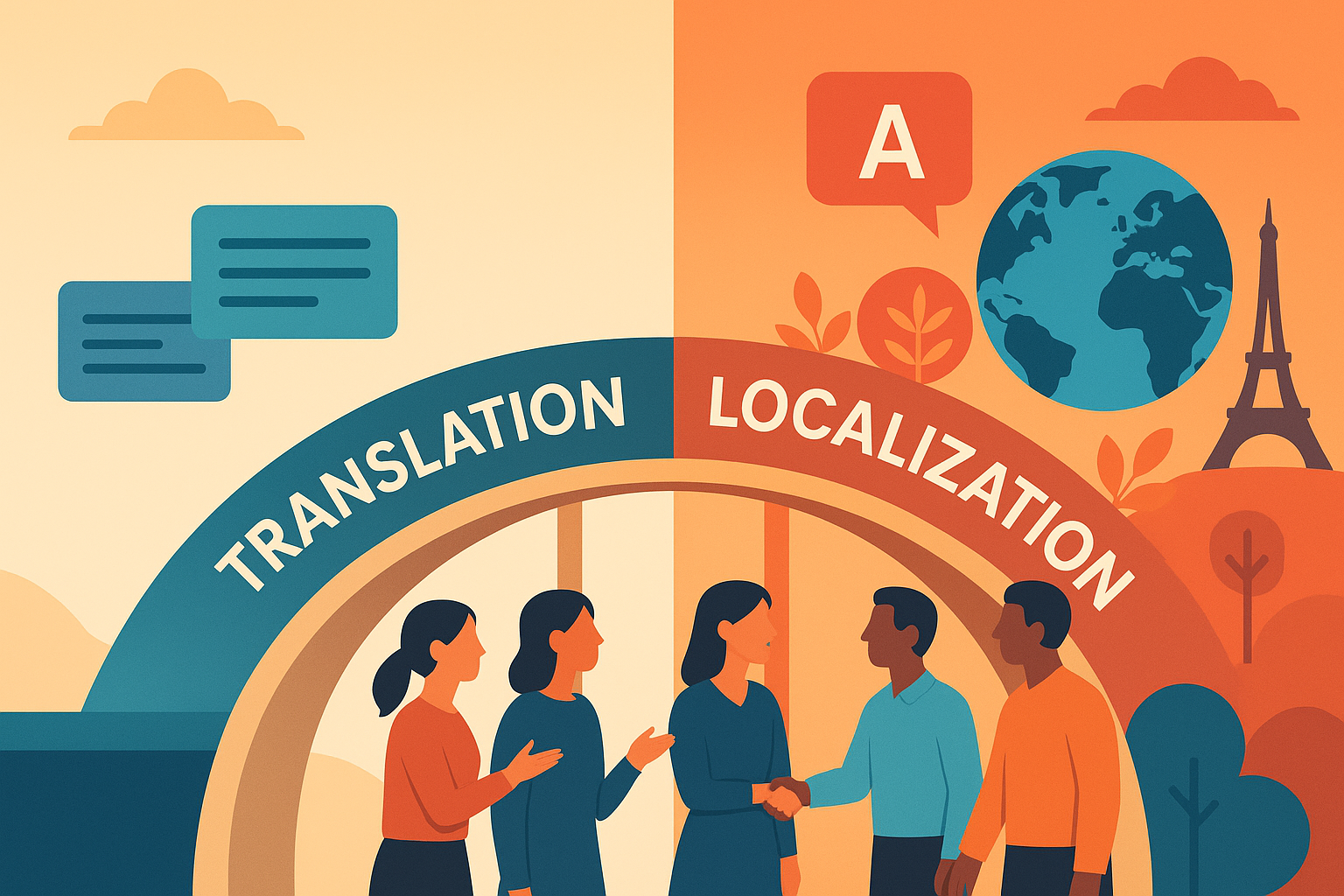
Many brands assume that localization is expensive, but it is actually a strategy to maximize return on investment (ROI). Localized content:
- Increase engagement with naturally resonant language
- Enhance SEO performance aligned with search algorithms
- Improve ad efficiency with region-optimized messaging
- Build trust and loyalty as an authentic brand
For global e-commerce brands, localization is essential. In the stages of Shopify ad content or video production, simply reflecting the cultural and emotional nuances and consumption patterns of each market leads to a stark difference in performance. Ultimately, while translation is about “conveying,” localization is about “connecting,” and in global marketing, “connection” is “conversion.”


