For years, ecommerce growth followed a predictable formula. Companies invested heavily in SEO, paid search, and website optimization because visibility meant appearing where customers were already looking. But the way customers discover products is changing.
Today, customers are no longer only searching for answers. They are asking for recommendations. Instead of searching "best Korean skincare product" on Google, a customer might ask an AI assistant, watch product reviews on TikTok, browse Reddit discussions, or compare recommendations on Amazon before making a decision. The future of e-commerce discovery is no longer about appearing in one place. It is about becoming the brand that customers, and increasingly, AI systems, recommend.

The traditional e-commerce journey was simple: search, click, purchase. However, global consumers now move through a much more complex path: Social discovery → AI recommendation → Community validation → Marketplace research → Purchase.
A customer may discover a product through a creator video, ask AI for alternatives, search Reddit for real experiences, check Amazon reviews, and only then decide whether to buy. Each interaction builds purchase confidence. This means brands can no longer optimize individual channels separately. A strong search ranking does not guarantee conversion, and a viral moment does not guarantee long-term growth. The brands that win will be those that create consistent signals across every discovery environment.
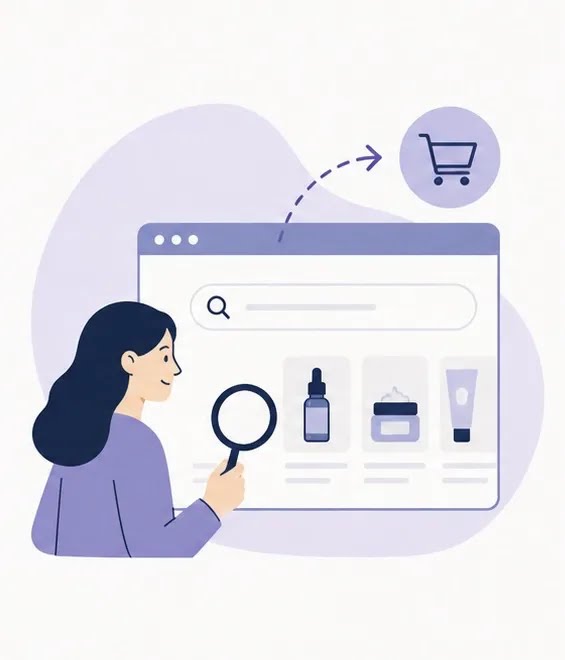
Traditional SEO focused on a single question: "How do we rank higher for this keyword?" AI-driven discovery introduces an entirely different one: "Why should this brand be recommended?" AI systems evaluate broader signals to determine credibility, including brand authority and recognition, product information quality, customer reviews and experiences, online discussions and mentions, and consistency across platforms.
A product page can explain what a product does, but customers and AI systems increasingly look for external validation. Do customers trust it? Are people discussing it? Does the brand have credibility within its category? Visibility is no longer created by one optimized page. It is created through an ecosystem of trusted information.
Historically, reviews were viewed as a conversion tool. Today, they are becoming a discovery signal. Consumers increasingly rely on real experiences before purchasing, especially in trust-driven categories such as beauty, wellness, and technology. A typical customer journey might begin with discovering a product through social media, then searching for customer opinions on Reddit, comparing recommendations through AI, and finally validating the decision through Amazon reviews. Each interaction strengthens or weakens purchase confidence.
This is why successful global brands invest beyond advertising. They build communities, encourage authentic customer conversations, and create content that reflects real consumer needs. Trust is no longer built only during checkout. It is built throughout the discovery journey.
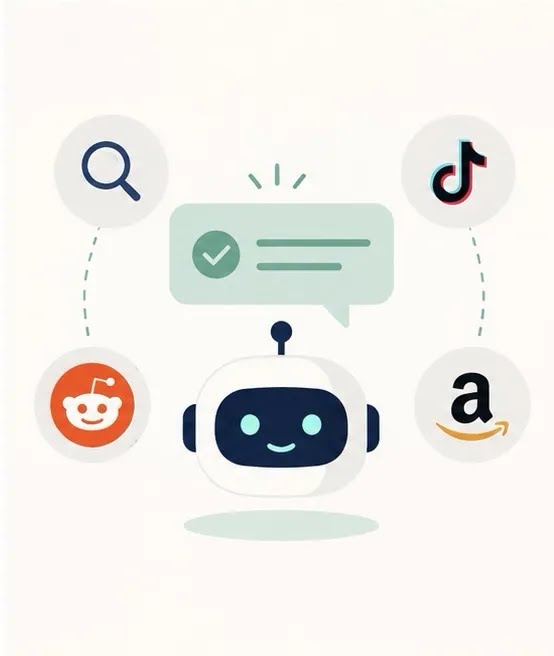
The shift toward AI-driven discovery reinforces an important change in global e-commerce. Growth is no longer created by optimizing individual channels in isolation. It is built by connecting every customer touchpoint, from the first piece of content customers see to the marketplace experience that converts interest into purchase.
At Disrupt, we help brands build these connected growth ecosystems by aligning performance marketing, marketplace strategy, content, and customer experience. For example, COSRX's global expansion was supported by connecting marketplace optimization, customer trust signals, and performance marketing efforts. By strengthening how customers discovered, evaluated, and purchased products, the brand built a stronger foundation for international growth. Similarly, InBody's strategy extended beyond acquiring new customers. By improving the digital customer journey and creating stronger connections between acquisition and retention, the brand developed a more complete ecosystem around its products.
These examples reflect a broader shift happening across e-commerce. The brands that succeed in the AI discovery era will not simply be the ones with the largest advertising budgets. They will be the ones that create the strongest network of trusted signals across every platform where customers search, compare, and make decisions.
The next generation of e-commerce leaders will not simply be the brands that rank highest on search engines. They will be the brands that customers, communities, marketplaces, and AI systems naturally recognize and recommend. In the new discovery era, search creates awareness, communities create trust, AI creates recommendations, and marketplaces create conversion. The brands that connect these experiences will build stronger visibility, lower acquisition costs, and more sustainable global growth.

Growth Manager
