The experience of running Amazon ads, yet seeing sales stubbornly refuse to grow.
This hurdle, which many Korean brands face when entering the U.S. market, isn't simply due to fierce competition or a lack of budget.

The key lies in the ‘invisible drop-off points’ within the consumer’s buying journey. In other words, customers who click your ad are leaving your detail page at some point.
At this stage, you must audit your Amazon SEO (Search Engine Optimization). This goes beyond just inserting keywords; you need to review your structure to ensure you are accurately identifying the ‘problem’ the customer typed into the search bar and designing the page to provide the exact information that meets their expectations.
Many brands believe that a great product is enough to be competitive. However, what matters on Amazon isn't just the features themselves, but a message that clearly persuades the customer: ‘Why choose this product among the countless others offering similar functions?’
For example, if a customer arrives via a “skin barrier strengthening” keyword, but the detail page only highlights “brightening,” that is a classic case of a mismatch between search intent and content messaging, which prevents conversion. This is why you get clicks but no sales.
Furthermore, the text-heavy and image-dense style typical of Korean detail pages can overwhelm American consumers. Customers don't want additional information; they want the ‘reassurance’ needed to make a purchase decision.
If your ad click-through rate is high but your conversion rate is low, it’s a sign that customers are dropping off somewhere before making a purchase. This can generally be attributed to the following three causes.
If even one of these is off, your conversion rate will inevitably drop significantly.
STEP 1. Precisely connect search keywords with detail page messaging
Search keywords are signals that reveal the “problems” customers are experiencing. Therefore, as shown in the examples below, the messaging on your detail page must be designed as a “solution” to these issues, ensuring a strong psychological connection.
For example, a customer searching for “anti-aging cream” is concerned about crow's feet or skin elasticity. Therefore, the detail page should present a solution to that problem with phrases like “Lifting effect from eyes to mouth.”
A customer searching for “Korean collagen moisturizer” expects deep hydration as well as the K-beauty trend. In this case, phrases like “synergistic hydration of collagen and peptides” can meet the customer's expectations.
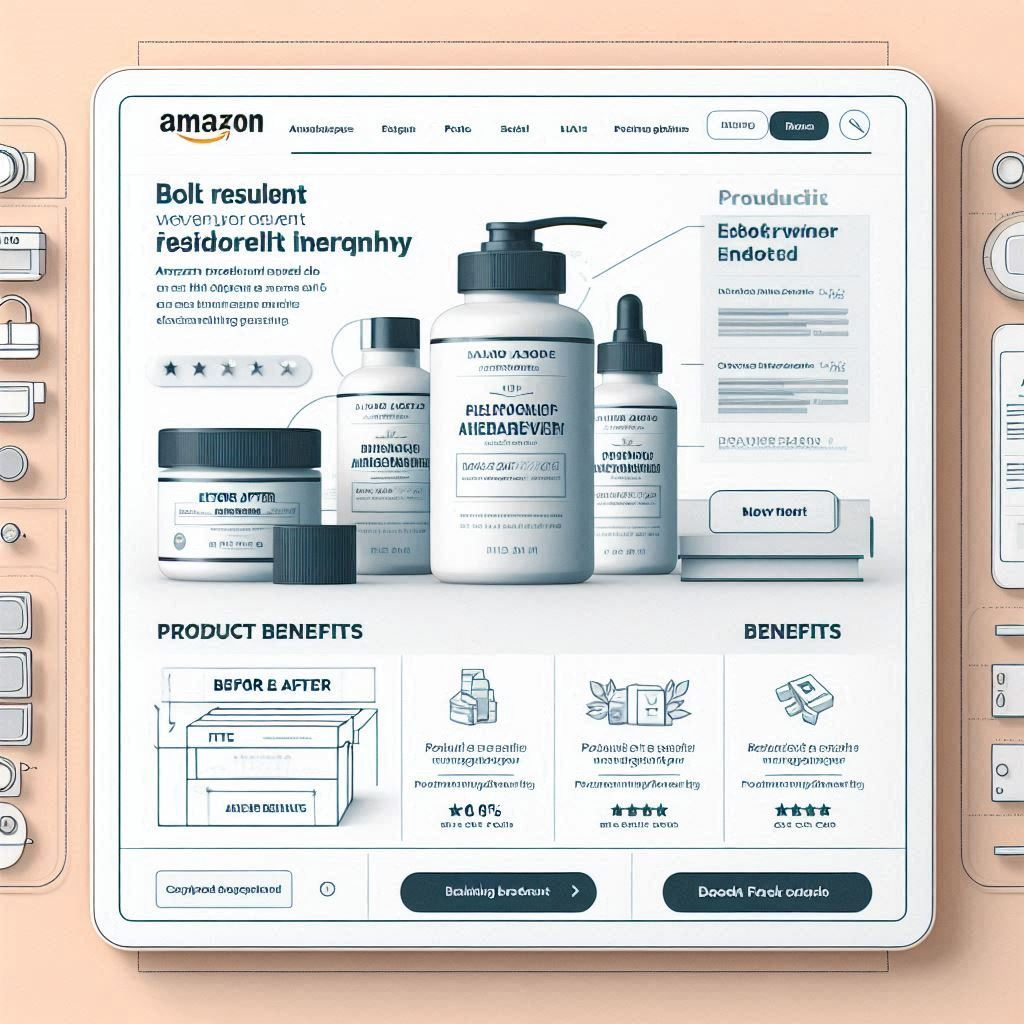
STEP 2. Restructure detail pages to facilitate purchase decisions
Customers don't want your brand story; they want a product that can solve their “problems.” For beauty products, for example, the following detail page flow can increase persuasiveness.
In the beauty category, A+ content is essential, as it directly impacts conversion rates.
STEP 3. Use reviews strategically
It is not just product information that influences purchasing decisions. If you use customer reviews strategically, they can become key content that drives sales rather than just simple reference material.
If your sales have plateaued despite increasing your ad budget, what you need right now isn't more money, but a more sophisticated and strategic funnel design. Without a well-connected funnel that integrates ads, content, reviews, and SEO, you will only generate clicks, not conversions.
However, designing and improving all these areas with an in-house team is difficult, as each element requires specialized expertise and data-driven decision-making. To drive brand growth and sales, you require the help of external experts like Disrupt, who possess deep understanding and execution capabilities across every area.
Beyond simple ad management, Disrupt is a “performance partner” that designs funnels and builds strategies optimized for Korean brands entering the global market, based on a profound understanding of Amazon.
If you are struggling with stagnant Amazon PPC ad performance, refer to this article to see how DISRUPT diagnoses problems and boosts performance with specific strategies and case studies.

Content Creation Specialist


